When my daughter yelled at me to leave if I wasn’t good enough for her husband, I didn’t answer angrily. I smiled, put the grocery bags on the floor, grabbed my suitcase, and left.
My name is Ernesto Robles, I am 68 years old and I live in Querétaro, although that night I understood that a house ceases to be a home when the people you love look at you as a nuisance.
My wife, Teresa, died 7 years ago. She and I bought that house after 32 years of work: she selling set meals at the La Cruz market, I as an accountant at an auto parts company.
Each brick held our weariness. Each window, a debt paid. Each tree in the yard, a Sunday afternoon with my daughter Daniela running after her mother.
Daniela was my only daughter. When Teresa got sick, I promised her that she would never want for anything. And I kept that promise all too well.
I paid for her private university, master’s degree, wedding, furniture, car down payment, and even the honeymoon that her husband Rubén couldn’t afford because he was “short on cash.” When they got married, Daniela asked me to stay with her for a few months while they saved up to become independent.
Those months turned into 5 years.
Rubén arrived with two suitcases and a fake smile. At first, he addressed me respectfully as “Don Ernesto.” Then he started calling me “Ernesto” as if we were equals. Later, he stopped using my name altogether.
—Hey, bring more tortillas.
—Excuse me, have you paid your electricity bill yet?
—Hey, the beer’s all gone.
I tolerated it for Daniela’s sake. He told me he was young, that marriages start off difficult, that families support each other. But families don’t support each other by stepping on the one who’s holding the floor up.
That Saturday I came back from the supermarket with 4 heavy bags.
I bought milk, bread, meat, detergent, and, because Rubén asked for it, a case of imported beer that cost more than my medicine for the month. I went inside tired, my hands marked by the plastic handles.
Rubén was sprawled on my recliner, the last gift Teresa gave me before she died. His feet were up on the coffee table, and he was watching football with an empty bottle in his hand.
He didn’t even turn around.
—Bring me another beer, since you’re standing around.
I left the bags on the table.
—I just arrived. First I’m going to put the food away.
Rubén turned down the volume on the television and looked at me as if I had disrespected him.
—So what? You’re already standing.
I felt something cold in my chest.
—This is my house, Rubén. Don’t talk to me like I’m your employee.
He stood up slowly. He was taller than me, broader, 34 years old, and incredibly arrogant. He approached, smelling of alcohol.
“His house,” he says. How curious. Because Daniela and I live here. So he’d better cooperate if he wants to stay calm.
At that moment, Daniela came out of the kitchen with her cell phone in her hand. She didn’t ask if I was okay. She didn’t look at the bags. She didn’t see my red hands. She only saw her husband looking upset.
-What’s happening?
Rubén pointed towards me.
—Your dad is making a scene because I asked him for a beer.
Daniela sighed, just like when she was a teenager and I asked her to clean her room.
—Dad, please. Don’t make a fuss over something so trivial.
—It’s not nonsense. He’s treating me like a servant.
Rubén let out a laugh.
—Well, if you live here, help out.
I looked at him.
—I pay for this house. I pay for the electricity, the water, the property tax, the internet, the groceries, and even your truck insurance.
Daniela stiffened. It bothered her that she was speaking truths in front of Rubén.
—Dad, don’t start with that.
—With what? By reminding them who’s keeping all this going?
Rubén took another step.
“Look, old man, this is how it’s going to be. You’re not in charge here anymore. If you want to stay under this roof, you have to respect my wife and you have to respect me.”
I looked at Daniela, hoping she would stop him. I expected to see the little girl who used to fall asleep on my shoulder when she was scared. But she crossed her arms and stood beside him.
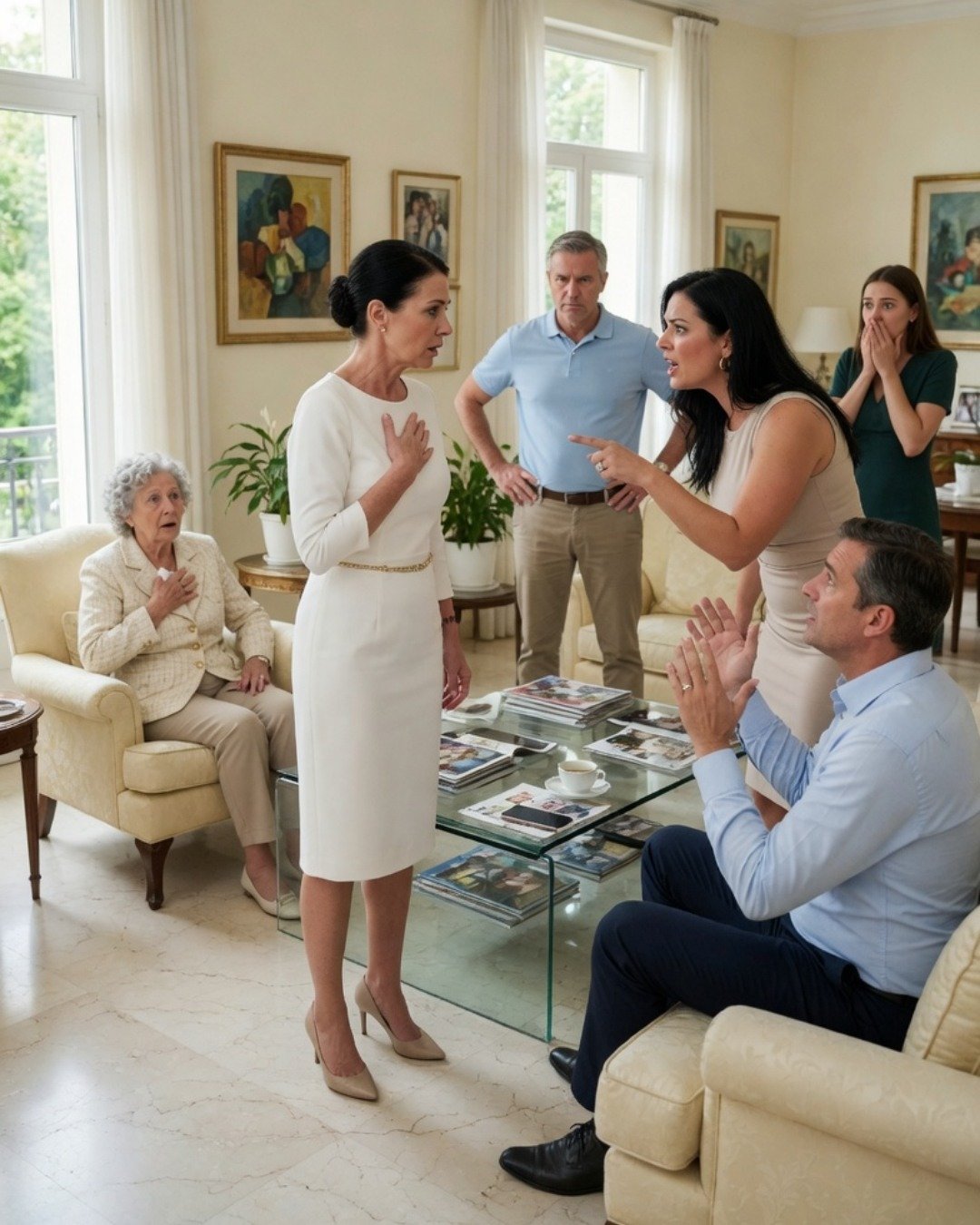
—Dad, make up your mind once and for all. Either you help Rubén and stop playing the victim, or you pack your things and leave.
The phrase landed like a stone in still water.
Rubén smiled, thinking I was going to lower my head.
—So, about my beer…
“I’m going to pack,” I said.
The smile vanished from his face.
Daniela opened her mouth.
—Dad, wait. I didn’t say it like that.
—You said it exactly like that.
I walked to my room. The wooden floor creaked under my footsteps, the same floor that Teresa and I varnished by hand when Daniela was 6 years old. I took an old suitcase out of the closet.
I packed clothes, medicine, my glasses, important papers, and Teresa’s photo. I didn’t take furniture, I didn’t take any large keepsakes. Just what would fit in a life that no longer wanted to beg for respect.
When I walked through the living room, Daniela was pale. Rubén was pretending to watch television, but his leg was trembling.
—Dad, don’t exaggerate.
I stopped at the door.
—I’m not exaggerating, daughter. I’m obeying.
I got into my old Tsuru and drove to a simple hotel near the station. The room smelled of cheap bleach and clean sheets. I put Teresa’s picture on the nightstand.
—Forgive me for taking so long—I said.
I opened my laptop, logged into my online banking, and checked my accounts: mortgage, insurance, additional cards, automatic payments, monthly transfers.
Everything came from me.
And that same night I decided that if they wanted to live without me, they would also have to live without my money.
PART 2
On Sunday I woke up early, like when I still worked. I ordered coffee at the hotel and spread my documents out on the table: bank statements, deeds, policies, cards, receipts.
Thirty years as an accountant had taught me that numbers don’t cry, but they tell truths that families hide. First, I canceled the automatic mortgage payment.
The house was in my name, but I had let Daniela and Rubén live there rent-free, thinking I was helping them. Later, I removed Rubén’s truck from my insurance.
Then I blocked Daniela’s additional cards. I also stopped the monthly transfer of 12,000 pesos I sent them “to make up the difference.” Each call was like taking a chain off my neck. The bank operator asked if I was sure.
-Completely.
By midday I had regained control of my money. There were no shouts, no insults, just confirmation numbers and emails. The calls started on Wednesday. First Daniela, confused.
—Dad, the bank says the house payment didn’t go through.
I didn’t answer. Then Rubén.
—Ernesto, don’t play around with this. You’re going to get us into trouble.
I didn’t answer either. By Friday, I already had 22 missed calls. I listened to the messages in order: annoyance, anger, threat, then fear. At 6 p.m., there was a knock at the hotel door. I looked through the peephole. It was them. I opened it, but I didn’t invite them in.
—Dad, please, we need to talk.
Rubén went ahead.
—What kind of old man does this for a beer?
—It wasn’t because of a beer. It was because of 5 years of abuse.
Daniela was crying.
—They’re going to charge us for everything. We don’t have the money to cover it.
—Then get extra work, sell the truck, or move your things.
Rubén gritted his teeth.
—He can’t kick us out. That’s our home too.
—No. It’s my house.
—We’ve lived there for years.
—As guests.
His face changed. I saw real fear. That reaction made me suspicious. The next day I went to the bank where I had worked for decades. My friend Raúl, the loan manager, received me privately. As soon as I told him the situation, he closed the door.
—Ernesto, there’s something you should know. Four months ago, Rubén tried to get a loan using your house as collateral.
I felt my hands go cold.
-As?
—He brought forged copies of an alleged transfer of ownership. It didn’t go anywhere because the deed is clear in your name.
He showed me copies. The forged signature looked like mine. Bad, but mine.
—What did you want the loan for?
Raul lowered his voice.
—He said remodeling. But there are rumors that he owes money on sports betting.
I left the bank with my stomach in knots. He wasn’t just a rude son-in-law anymore. He was a man intent on robbing me. I went straight to my lawyer, Ms. Barragán.
That same day we initiated formal eviction proceedings for squatting without a contract and added a complaint for attempted fraud. I also changed my will.
The house would no longer be for Daniela. After my death, it would be given to a foundation for abandoned senior citizens and women in need of temporary housing. When Daniela found out through the legal notification, she called me crying.
—Dad, are you taking away my inheritance?
—No, daughter. I’m taking the prize away from the one who confused love with permission to humiliate.
—Rubén says you’re senile.
—Rubén can say whatever he wants. My documents say otherwise.
Then came the second blow. A neighbor sent me a video: Rubén yelling outside my house that I was crazy, that Daniela was pregnant, and that I was letting them die. I called my daughter.
—Are you pregnant?
Silence.
—Rubén said that maybe that way you’d soften up.
His silence hurt me more than the lie.
—I’ll be at 10 a.m. mass at San Miguel on Sunday. If you still want to be my daughter without depending on my money, go and tell the truth in front of everyone.
—Do you want to humiliate me?
—No. I want to know if you still have the courage.
That night, for the first time, I cried. Not because of the house. Not because of the money. I cried because I understood that my daughter had lost me long before I even took the suitcase out.
Hello, dear readers! If you’re ready to read the next part, please click [Like] and write “Yes” below, and I’ll send it right away. I wish all of you who have read and loved this story much health and happiness!
PART 3
On Sunday I arrived at the Church of San Miguel wearing my blue shirt and carrying Teresa’s photo in my wallet. I didn’t go there for revenge. I went to see if the truth could still break through so many lies.
The church was more crowded than usual. In the towns and neighborhoods of Mexico, gossip travels faster than church bells, and by then everyone knew something was going on at the Robles’ house.
I sat in the third row. Attorney Barragán was in the back, in case Rubén tried to make a scene. Raúl was there too. Doña Carmen, my neighbor, winked at me as if to say, “You’re not alone.”
When the priest opened the space for testimonies, I thought Daniela wouldn’t come. Then I saw her. She came in through the side door, alone, without Rubén. Her face was swollen from crying, and she walked as if each step weighed 100 kilos. She stepped up to the microphone. For a moment, she looked at the floor. Then she looked at me.
—I’ve come to tell the truth about my dad.
The temple fell silent.
—For five years, my father supported my husband and me. He paid for the house, groceries, utilities, car insurance, and many of our debts. I allowed Rubén to treat him like a burden, as if he were living off us, when in reality we were living off him.
There were murmurs. Daniela clutched the paper she was holding.
—Last Saturday I told her to serve my husband or leave her own house. My father chose to leave. And instead of stopping him, I sided with the man who humiliated him.
Tears streamed down her face, but she didn’t stop.
—I also have to say that Rubén lied. I’m not pregnant. He used that lie to manipulate my dad. And now I know he tried to get money using forged documents from my father’s house.
Several women crossed themselves. The priest lowered his gaze. Doña Carmen murmured something I didn’t understand, but it sounded like righteous anger.
“Dad, you didn’t deserve that. You didn’t deserve for me to forget everything you did for me. I’m not here to ask for money or the house. I’m here to ask for your forgiveness and to say in front of everyone that you were a good father, even when I was a bad daughter.”
I didn’t run to hug her. It wasn’t the time to erase the consequences with tears. But I nodded. And she understood.
As he left mass, Rubén appeared in the plaza, furious. His hair was disheveled, his shirt was open, and his eyes were red.
—You wretched old man, did you turn my wife against me?
Ms. Barragán took a step forward.
—Mr. Rubén Salas, there is a restraining order pending and a complaint for forgery. I suggest you leave.
He pointed at me.
—That house is mine too. I lived there. I have rights.
Raúl, the manager, let out a dry laugh.
—You tried to mortgage someone else’s house with forged documents. You’re in trouble.
Rubén tried to approach, but two municipal police officers who were on the corner intervened. Someone had already called them. While they were detaining him to take his statement, Rubén shouted:
—Daniela, tell them you knew!
Daniela went white. That was the third blow. Rubén was willing to ruin her in order to save himself.
My daughter took a step back, as if she finally saw it all.
—Don’t come looking for me again.
Rubén was taken to the patrol car amidst shouts. Later we learned that he owed more than 300,000 pesos in gambling debts and payday loans. He had also used Daniela’s credit cards without telling her. He left the state weeks later, leaving behind debts, threats, and a lawsuit that still haunted him.
Daniela didn’t come back to my house. That was my condition. I helped her find a small room near her work; I didn’t pay her for it, I just went with her to make sure the contract was fair.
She started therapy. She got extra appointments. She wrote me a public letter that was posted in the neighborhood group and another one at the church. She didn’t try to justify herself. That was the only thing that made me think that maybe all was not lost.
The house sat empty for two months. Going back in felt strange. Teresa’s armchair was still there, but it no longer smelled of beer or arrogance. I changed the locks, painted the walls, and got rid of everything Rubén had left behind. Each box I threw out was like removing a piece of his sickness.
Then I did what I said I would. I signed a notarized document stating that, when I die, the house will go to a local foundation for elderly people without families and women who need a fresh start. As long as I live, it will remain mine. Not out of guilt. Not out of habit. Mine.
I moved to a smaller house near Lake Tequesquitengo. It wasn’t luxurious, but it had a porch where I drink coffee while looking at the water and a room where I put Teresa’s photos.
For the first time in years, my pension was enough. I bought books, went to the doctor without worrying about whether Rubén needed gas, and even signed up for danzón classes on Thursdays.
Daniela invited me for coffee 3 months later.
—Dad, I’m not here to ask for anything.
—Then sit down.
We talked for 40 minutes. Not about money. Not about the house. We talked about Teresa, about her fear of being alone, about how she let herself be swept away by a man who convinced her that I was weak because I was generous.
—Will you ever trust me again?
I looked at her. I saw the little girl I went to pick up from elementary school in the rain, but I also saw the woman who had kicked me out of my house.
—Forgiveness has already begun, Daniela. Trust will have to take time to develop.
She cried, but she accepted it. That gave me hope.
He still messages me today. Not every day. Not with demands. Sometimes he just says:
—Dad, I already paid my rent myself.
EITHER:
—I went to therapy today.
And I reply:
-Well done.
I don’t know if our relationship will ever be the same. Maybe not. Maybe it shouldn’t be the same again. Sometimes what’s broken isn’t repaired to be identical, but to become more honest.
If there’s one thing I’ve learned, it’s this: loving your children doesn’t mean surrendering your dignity in monthly payments. Helping them doesn’t mean letting them use you. And a house paid for with a lifetime of work shouldn’t become a prison just because someone of your blood lives there.
When my daughter told me to serve or leave, I chose to leave. But in reality, that day I didn’t leave my house. I left the lie that a father must endure everything to remain a father.
And since then, every morning in front of the lake, with my hot coffee and Teresa’s photo next to me, I repeat the same thing to myself:
—It was late, but I regained control of my life.