In the years since the January 6, 2021 Capitol attack, the political terrain in Washington has remained deeply divided. Claims, counterclaims, investigations, and partisan narratives have shaped not just how politicians talk about that day, but how they view accountability, oversight, and the role of institutions like Congress and the FBI.
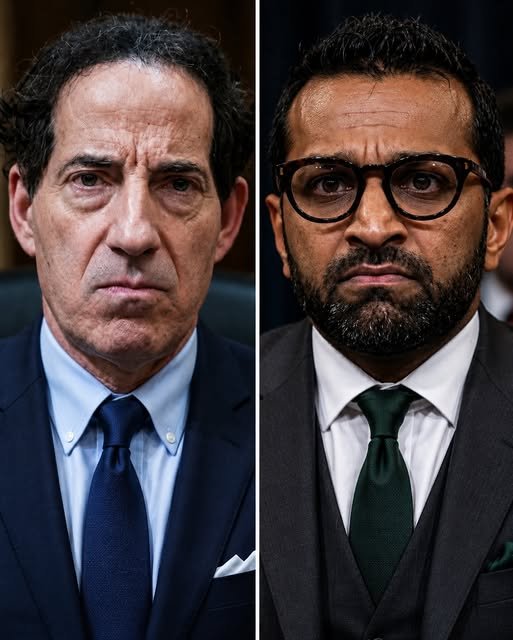
In recent weeks, new rhetoric — including dramatic accusations against key figures like Representative Jamie Raskin and FBI Director Kash Patel — has reignited debates across the political spectrum. But how much of what’s being claimed is verified? What is allegation versus fact? And why has this become such a flashpoint?
This long‑form article explores the controversy in depth, offering context, documented evidence, political reaction, and an honest assessment of where things truly stand.
The Background: January 6 and Its Aftermath
To understand the modern political firestorm, we must return to January 6, 2021 — the day thousands of supporters of then‑President Donald Trump stormed the U.S. Capitol building as Congress attempted to certify the 2020 election results.
The House January 6 Committee
Soon after, the U.S. House of Representatives established the House Select Committee to Investigate the January 6 Attack on the U.S. Capitol (commonly called the January 6 Committee). Its mission was to examine the causes of the attack, breakdowns in security, and how to prevent similar events.
Over the course of its work, the committee held hearings, subpoenaed testimony, and released a detailed final report. Republicans and Democrats disagreed on both process and conclusions, with Democrats viewing the committee’s work as a necessary investigation into a historic breach, and many Republicans characterizing it as partisan and politically motivated.
A Divided Public Narrative
The committee’s findings — including recommendations and suggested reforms — were embraced by some as factual reconstructions of events. Others dismissed them as politically charged narratives aimed at damaging specific political actors.
This polarization set the stage for how future disputes, including the allegations that are now circulating, are interpreted and amplified.
The Players: Who Are Kash Patel and Jamie Raskin?
To explore the latest controversy, we need to understand the key figures involved.
Kash Patel — FBI Director
Kash Patel served in the Trump White House and later became Director of the Federal Bureau of Investigation under the administration that followed. His tenure has been subject to intense scrutiny for several reasons:
Media Reports and Allegations: Multiple news outlets reported episodes of alleged unprofessional behavior and leadership concerns within the FBI under his direction. Patel has denied these reports, calling them false and politically motivated. He has responded with legal action — including a $250 million defamation lawsuit against The Atlantic for one such report.
Political Reaction: Republican lawmakers have, at times, defended Patel vigorously, while Democratic lawmakers have raised concerns about his conduct and the direction of the FBI.
Investigations: Some reporting indicates that Patel was previously interviewed as part of a broader investigation by a special counsel — but nothing from that inquiry has publicly led to criminal charges against him.
Importantly, no credible public evidence shows FBI Director Kash Patel engaged in bribery, witness intimidation, or the type of criminal plot described in some online narratives. Those claims are circulating on social media and partisan blogs but have not been substantiated by reliable reporting or official statements from investigators.
Jamie Raskin — U.S. Representative
Representative Jamie Raskin (D‑Maryland) is a constitutional law scholar and senior Democratic member of the House Judiciary Committee. He has been a prominent voice defending congressional oversight, legal accountability, and democratic norms.
Raskin was actively involved in the January 6 Committee work as a senior Democratic lawmaker and has consistently spoken about the importance of transparent investigations into the Capitol attack. Like many politicians on both sides of the aisle, he has also been a target of political attacks and conspiratorial claims — some of which have no grounding in verified evidence.
The Allegations: What Is Being Claimed and What Is Actually Verified
In recent weeks, a narrative has gained traction in some corners of social media and alternative news sites. It includes dramatic claims that:
The January 6 Committee was not just flawed but criminal in its operations.
Representative Jamie Raskin allegedly orchestrated a “criminal plot” involving manipulation of evidence.
FBI Director Kash Patel and the bureau have supposedly uncovered a “mountain of evidence” involving bribery, witness intimidation, and systematic lies.
Calls are increasing for a Grand Jury investigation into members of the January 6 Committee.
Analyzing These Claims
Careful verification shows that:
There Is No Public Evidence of Criminal Conduct by Raskin
While partisan critics have leveled accusations against Representative Raskin, mainstream news outlets, official court filings, and primary documents do not support claims that he led a “criminal plot” involving the January 6 Committee.
Allegations circulated online often come from anonymous posts, fringe outlets, or users on platforms that do not require fact‑checking. These do not rise to the level of verified reporting.
There Is No Verified Evidence of FBI Discovery of Bribery or Intimidation
Claims that the FBI has uncovered a “mountain of evidence” involving bribery and intimidation tied to the January 6 Committee are not supported by official FBI announcements or Department of Justice filings. Law enforcement agencies do not make investigative claims in private; they do so through public statements, indictments, or legal filings — none of which exist on this topic as of publication.
Calls for Investigations Reflect Political Debate, Not Judicial Orders
Political figures and commentators have indeed called for increased scrutiny of government institutions and oversight of congressional committees. That is part of democratic debate. However:
There is no official Grand Jury convened against Representative Raskin for corruption as described.
There is no public DOJ investigation accusing the January 6 Committee of criminal wrongdoing tied to bribery or intimidation.
Many of these claims derive from interpretations of political conflict, not legal findings.
Why These Narratives Spread
Understanding why dramatic allegations attract attention requires unpacking the broader information ecosystem.
Polarization and Confirmation Bias
When politics is deeply divided, individuals often seek information that confirms their beliefs. In such environments, dramatic claims — especially those that fit a preferred narrative — spread quickly.
Social Media Amplification
Platforms with minimal moderation or fact‑checking allow unverified claims to circulate widely. Memes, headlines, and snippets of text can be shared millions of times — often without context.
Alternative News Networks
Sites and channels that position themselves as counter‑mainstream or “anti‑establishment” often publish material that mixes factual reporting with unverified claims. Readers who distrust mainstream media may view these sources as more credible, even when verification is lacking.
Strategic Political Messaging
Political actors sometimes use bold rhetoric to energize supporters, shift narratives, or reframe controversies. This is a long‑standing aspect of political communication, not unique to any one party or ideology.
The FBI and Congressional Oversight: A Complicated Relationship
At the heart of some of the claims are broader questions about the relationship between the FBI and congressional oversight.
FBI’s Mandate and Public Trust
The FBI is an investigative agency responsible for enforcing federal law. Its credibility depends on public trust, political neutrality, and professionalism. When leadership is perceived as partisan, critics argue that trust erodes.
Director Kash Patel’s tenure has been controversial in this sense — not because of proven criminal activity, but because of sharp political disputes about the direction of investigations and the bureau’s role.
Congressional Power and Limits
Congressional committees — whether tasked with oversight, investigation, or legislation — operate within constitutional bounds. While they have subpoena power and can hold hearings, their findings are not themselves judicial evidence of criminal conduct.
Disputes over committee process, tone, or focus are part of normal legislative conflict. They do not equate to verified criminal activity unless proven in court or through credible investigative findings.
WATCH: FBI Director Patel grilled on Epstein files in House hearing | PBS News
Statements From Public Figures
It’s useful to look at what key leaders have publicly said — not what is rumored or claimed anonymously.
Kash Patel on Criticism
At Senate hearings and in public statements, Patel has defended the FBI’s work and rejected claims of unprofessional conduct. He has called certain media reports “false” and has sought legal remedies against outlets he believes defamed him.
This response signals a willingness to confront criticism legally rather than through private admission of wrongdoing.
Jamie Raskin on Oversight and Accountability
Representative Raskin has maintained that government investigations should be thorough, transparent, and free from political manipulation. He has criticized efforts to reframe January 6 in ways that ignore documented evidence of responsibility and danger.
Raskin’s public statements focus on constitutional governance, rule of law, and the importance of accurate information — themes consistent with his long record as a constitutional law scholar.
What the Courts and Justice System Have Actually Found
To date:
No credible indictments have been filed alleging that members of the January 6 Committee engaged in bribery, witness intimidation, or criminal conspiracy as a result of their committee work.
No public Department of Justice action has produced evidence of such wrongdoing.
Federal investigations involving Kash Patel pertain to internal inquiries or previous oversight matters — but none have led to criminal charges tied to the subject matter of the online narratives.
This distinction — between allegation and legal action — matters in political journalism and public discourse.
How to Evaluate Political Claims Responsibly
Given the proliferation of dramatic narratives online, consumers of news should apply critical thinking:
Check Source Credibility
Is the claim coming from a major reputable news organization with fact‑checking standards, or from anonymous posts with no evidence?
Look for Primary Documentation
Official statements, court filings, and transcripts matter more than rumor threads.
Be Wary of Headlines Without Evidence
Dramatic headlines — especially those framed as secret plots or explosive leaks — often lack verifiable backing.
Distinguish Political Rhetoric From Legal Findings
Political debate can be heated and use charged language, but that is not the same as proven conduct in a court of law.
Why This Matters for American Democracy
The controversy is not just about personalities like Kash Patel or Jamie Raskin. It reflects deeper questions about:
Trust in institutions like the FBI and Congress.
The role of oversight versus politics.
How citizens evaluate truth in a digital age.
If political narratives are accepted without verification, public understanding becomes fragmented. Conversely, if legitimate concerns are dismissed without examination, accountability erodes. A healthy democracy requires scrutiny, evidence, and transparency.
Conclusion: Facts, Context, and the Path Forward
The narrative surrounding January 6, the January 6 Committee, Kash Patel, and Jamie Raskin is complex.
There are verified controversies, legitimate disagreements, and political fault lines. There are also unverified claims circulating online that have no basis in established fact.
A responsible public conversation distinguishes between:
Clear documentary evidence
Political criticism and disagreement
Allegations that lack verification
As of now:
There is no confirmed public evidence that Jamie Raskin led a “criminal plot” involving the January 6 Committee.
There is no verified evidence that the FBI under Kash Patel uncovered bribery, witness intimidation, or systematic lies tied to that committee.
There are robust discussions about institutional trust, political narratives, and oversight, which continue to shape American political life.
Understanding these distinctions is critical — not just for readers, but for any responsible publisher or content creator.