THE EARLY YEARS IN DUBLIN
Maureen FitzSimons was born on August 17, 1920, in Ranelagh, an affluent suburb of Dublin, Ireland. She grew up in a lively Irish Catholic household where music, theater, and spirited debates filled the air. Her father was a violinist, her mother a dancer and amateur actor, and the extended family was a whirlwind of personalities, discipline, and love. From an early age, Maureen demonstrated fearlessness and athleticism uncommon for girls of her generation. She played football with the boys, rode horses across open fields, and swam in the River Dodder regardless of weather conditions. Her natural energy earned her the affectionate nickname “baby elephant,” a reference to her boundless spirit and presence. Being the only redhead in her family sometimes made her painfully self-conscious, but those insecurities vanished the moment she stepped onto a stage. By fourteen, she had earned a coveted place at Ireland’s prestigious Abbey Theatre, performing alongside some of the country’s most talented actors. The stage became her sanctuary, a place where talent, courage, and charisma spoke louder than appearance or fear.
THE BIRTH OF MAUREEN O’HARA
At sixteen, Maureen traveled to London for a screen test. The experience was intimidating; the camera felt unnatural, and her nerves threatened to undermine her confidence. However, fate intervened when Charles Laughton, the renowned actor and director, recognized her extraordinary presence. He cast her in Alfred Hitchcock’s Jamaica Inn, instructing her to adopt a new screen name. From that moment, Maureen FitzSimons became Maureen O’Hara, a transformation that signaled not only a new identity but also the birth of a cinematic legend. A year later, she starred in The Hunchback of Notre Dame, showcasing a blend of vulnerability and strength that would become her hallmark. Her performance in How Green Was My Valley in 1941 cemented her international stardom, demonstrating that her talent could command both emotional depth and audience admiration. Yet, alongside her rise came challenges—powerful men, studio politics, and the pressures of a Hollywood system that often sought to diminish independent spirits like hers.
THE HARSH REALITY OF HOLLYWOOD
Director John Ford, a towering figure in American cinema, admired Maureen’s talent but could also be notoriously cruel. Their friendship was complicated by episodes of aggression, including a moment when Ford punched her in the jaw in front of an entire crew. Maureen did not flinch; she met intimidation with calm resolve. This pattern repeated in her career, as she encountered harassment and bullying from directors and studio executives who assumed a woman could be molded to their will. On one set, when John Farrow lunged at her with a crop, she finally retaliated with a solid punch to his jaw, ending the harassment immediately. These incidents were emblematic of the larger power dynamics in Hollywood at the time. Maureen refused to compromise her dignity or acquiesce to threats. Her toughness became a defining trait, earning her respect from co-stars, crew, and even the audience, while maintaining her femininity and grace.
THE LEGENDARY PARTNERSHIP WITH JOHN WAYNE
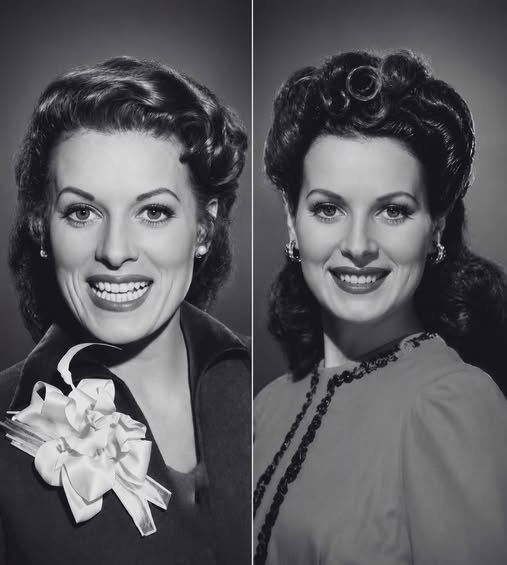
In the 1950s, Maureen O’Hara’s on-screen chemistry with John Wayne became the stuff of Hollywood legend. Together, they created iconic films like The Quiet Man, blending romance, adventure, and a palpable sense of authenticity. Audiences adored her fiery beauty and intelligence, but those who worked with her respected her even more for her courage and professionalism. She performed many of her own stunts, learned advanced sword fighting for historical dramas, and stood toe-to-toe with co-stars in both physical and emotional intensity. These films showcased not only her talent but also her capacity to command respect in a male-dominated industry. Maureen’s persona on-screen reflected her real-life resilience—bold, intelligent, and unyielding. Her dedication to craft and refusal to be intimidated set her apart from her contemporaries and solidified her legacy as one of the strongest female presences in classic Hollywood.
File:Maureen O’Hara 1956 crop.jpg – Wikimedia Commons
FIGHTING BACK AGAINST FALSE ACCUSATIONS
In 1957, a scandal magazine fabricated a sensational story alleging that Maureen had been involved in a compromising incident at a Los Angeles movie theater. Most stars of the era would have quietly settled with the publication to avoid negative publicity, but Maureen refused to be bullied. She sued the magazine, taking her case to court with calm determination. Witnesses testified under oath to support the story, attempting to undermine her credibility. In response, Maureen produced her passport, which showed official stamps proving she was thousands of miles away in Spain when the alleged incident occurred. The fabricated story collapsed instantly, and the magazine never recovered from the lawsuit. Her courage in the face of public scrutiny demonstrated her integrity and unwillingness to let lies define her. It also sent a message to Hollywood and the public that she would not be intimidated or silenced.
LOVE, LOSS, AND A NEW CHAPTER
Years later, Maureen married Charles F. Blair Jr., a pioneering aviator she described as the absolute love of her life. Their relationship exemplified partnership built on mutual respect, admiration, and shared adventure. Tragically, Blair died in a plane crash, leaving Maureen to navigate loss with the same resilience that had defined her career. She took over his aviation company, becoming the first woman to lead a scheduled commercial airline in the United States. This chapter of her life highlighted a different kind of bravery—not in front of cameras or audiences, but in business and in life. Maureen demonstrated that courage, intelligence, and leadership were not confined to Hollywood sets but could be applied in any sphere where challenge and risk intersected.
Vale – Maureen O’Hara
RECOGNITION AND LEGACY
In 2014, at ninety-four years old, Maureen O’Hara received an Honorary Oscar, a symbolic recognition of a career filled with unforgettable performances, professional integrity, and personal courage. Remarkably, she had never received a single competitive Academy Award nomination throughout her career, a testament to her indifference to institutional validation. Her life story—surviving Hollywood’s pressures, fighting harassment, defending her reputation, and leading in business—illustrates a legacy far beyond filmography. Maureen O’Hara became a symbol of strength, dignity, and unyielding independence. She refused to allow powerful men, studios, or tabloids to dictate her story, standing her ground repeatedly and achieving success on her own terms. She exemplified the idea that true influence comes not from accolades or approval, but from courage, talent, and integrity sustained across a lifetime.