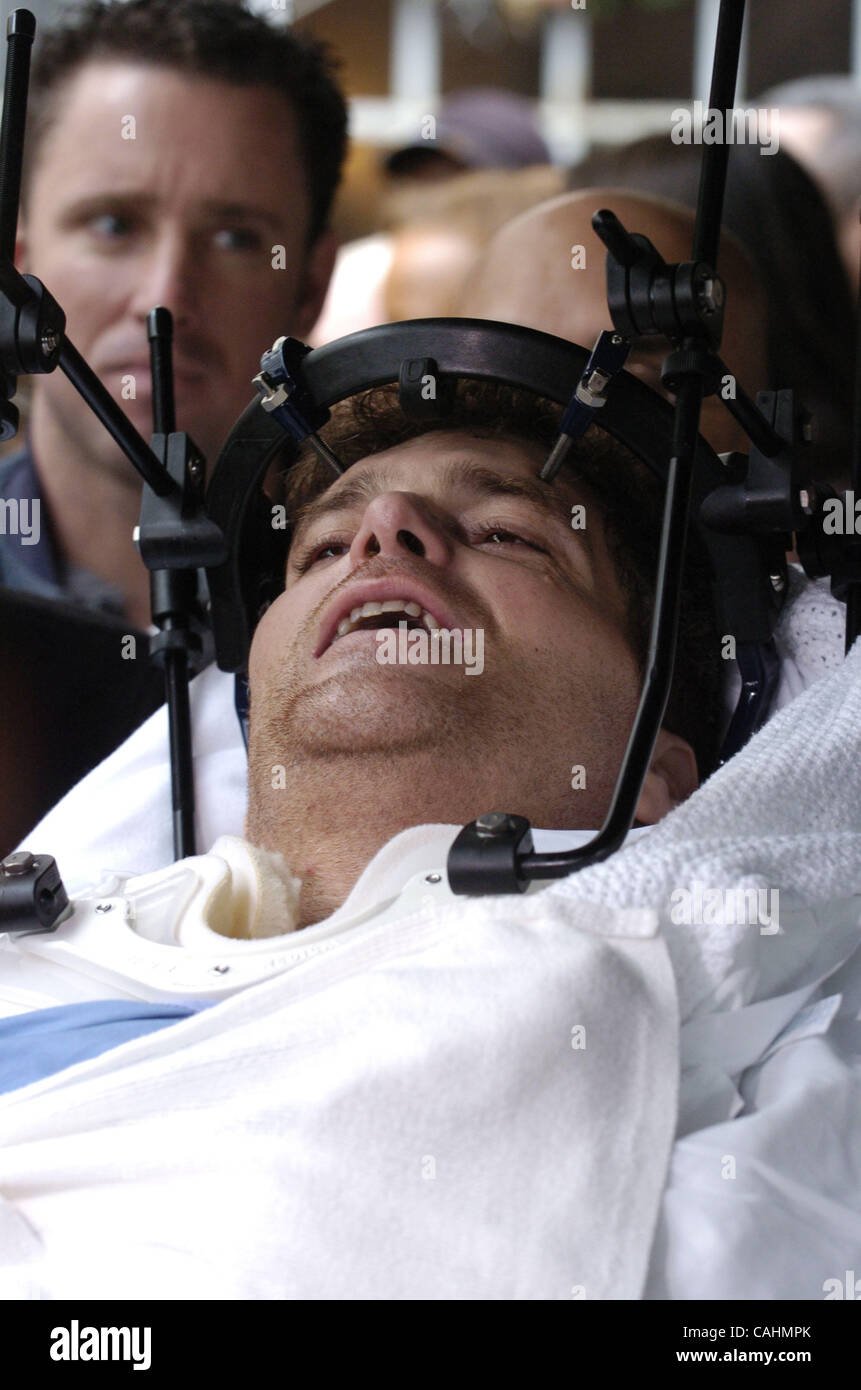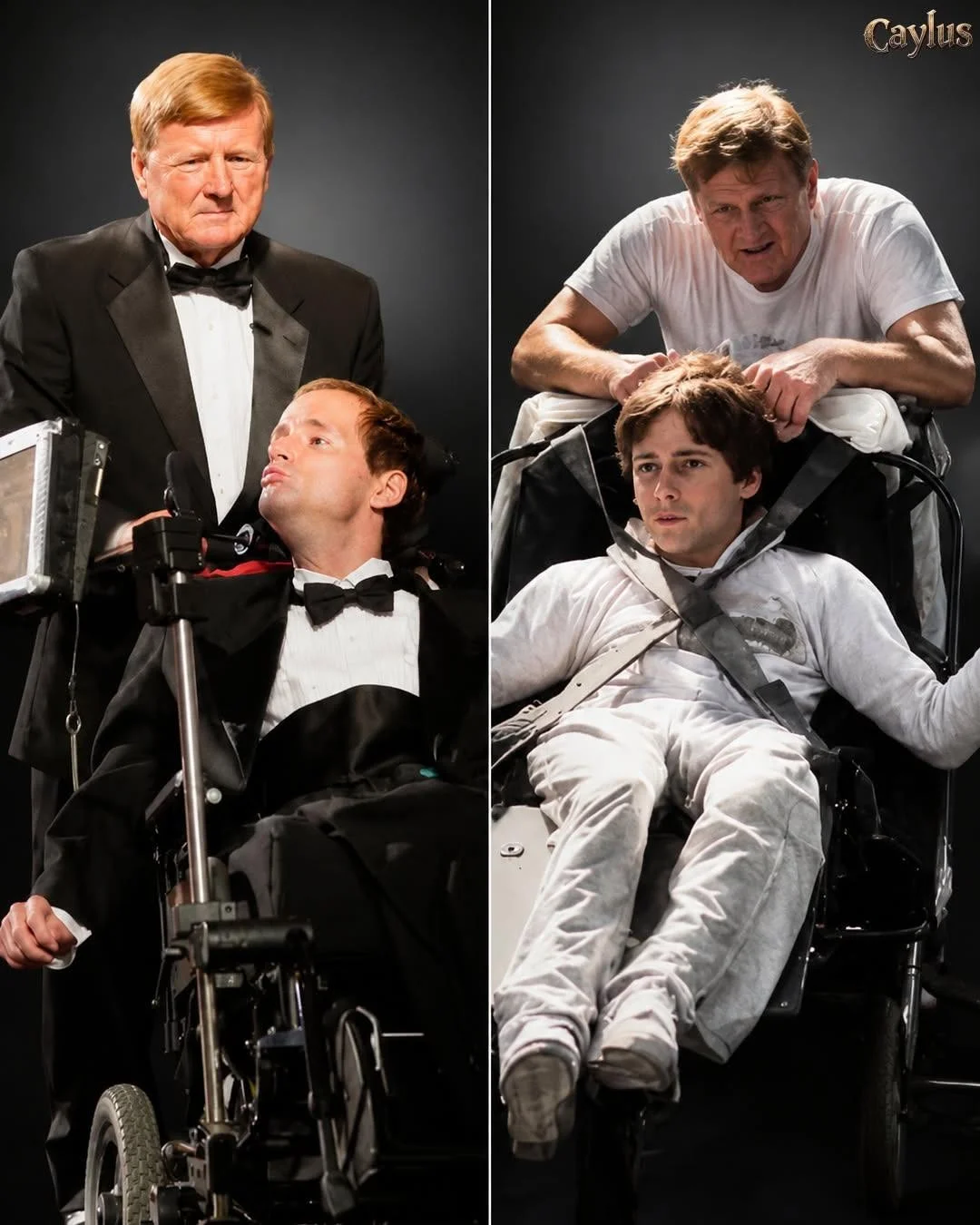
In 1977, a simple question was asked by a 15-year-old boy.
It was not shouted.
It was not dramatic.
It was typed slowly, letter by letter, through a communication device that required immense patience and effort.
But that question would change not only his life—but the life of his father, and eventually inspire millions around the world.
The boy was Rick Hoyt.
And the question he asked was simple:
“Dad, can we run in that race?”
A Child the World Almost Gave Up On
Rick Hoyt was born with cerebral palsy, a condition that severely affected his muscle control and speech.
From the moment he entered the world, expectations around him were limited—not by his potential, but by the assumptions of others.
Doctors told his parents that Rick might never communicate.
They suggested he would likely never live independently.
At the time, that was a common recommendation for children with severe disabilities.
Many families were advised to place their children in institutions, where care would be managed by professionals but emotional connection would be minimal.
But Rick’s parents, Dick and Judy Hoyt, made a different choice.
They refused to give up their son.
They refused to reduce his life to a diagnosis.
Instead, they brought him home.
And they began a journey of inclusion that would redefine what family means.
The First Breakthrough: Communication
For years, Rick’s world was locked inside his body.
He could see.
He could think.
He could feel.
But he could not easily communicate.
That changed when engineers at Tufts University developed a special communication device for him.
The system allowed Rick to move his head against a switch that would select letters on a screen.
Slowly.
Carefully.
One letter at a time.
For the first time in his life, Rick could express thoughts that had always existed inside him.
And what he expressed was not frustration.
Not limitation.
But curiosity.
And hope.
The Question That Changed Everything
One day in 1977, Rick learned about a charity race being held to support a classmate who had been paralyzed in an accident.
It was a small local event.
Nothing major.
Just a community run.
But for Rick, it represented something far larger.
So he typed a question to his father:
“Dad, can we run in that race?”
Dick Hoyt was 36 years old at the time.
He was not an athlete.
He had no training in endurance sports.
He had no experience running long distances.
But he did not hesitate.
He simply said yes.

The First Race
The race was five miles long.
For most participants, it was a moderate challenge.
For Dick Hoyt, it was something entirely new.
But for Rick, it was everything.
Rick sat in a wheelchair while his father pushed him from behind.
There were no cameras.
No crowd attention focused on them.
No expectation that anything extraordinary was happening.
They were simply another team in a local race.
They finished near the back of the group.
Tired.
Sweaty.
Unnoticed.
But that evening, something happened that would alter everything.
Rick typed a message to his father:
“When I’m running, it feels like I’m not handicapped.”
That sentence stayed with Dick forever.
Because it revealed something he had not fully understood before.
Running was not about sport for Rick.
It was about freedom.
The Decision to Continue
That moment became a turning point.
Dick Hoyt realized something profound:
if running gave his son a sense of freedom, then they would keep running.
Not once.
Not occasionally.
But as a shared life direction.
What started as one race became a commitment.
A commitment that would last decades.
And soon, they became known as Team Hoyt.
A Partnership Unlike Any Other
As their journey continued, their races grew longer and more complex.
They moved from local runs to marathons.
Then triathlons.
Then Ironman competitions.
Each event demanded different physical challenges.
But they adapted.
Together.
In marathons, Dick pushed Rick in a specially designed wheelchair.
In triathlons, he swam while pulling Rick in a small inflatable raft.
During cycling segments, Rick sat in a seat attached to the front of the bike.
And then, after hours of exertion, Dick still pushed Rick through the final running portion.
Every race required preparation, endurance, and resilience.
But more than anything, it required trust.
Absolute trust between father and son.
More Than 1,100 Races
Over the course of their journey, Team Hoyt completed more than 1,100 races.
Including:
32 Boston Marathons
Multiple Ironman triathlons
Hundreds of local races across decades
They were not professional athletes.
They were not sponsored at first.
They were simply a father and son refusing to let limitations define their relationship.
And over time, their presence began to draw attention.
Not because they were the fastest.
But because they represented something far more powerful:
possibility.
The Philosophy That Defined Them
When asked how he managed such physically demanding challenges, Dick Hoyt often gave a simple answer:
“I’m just lending Rick my arms and legs. He’s the one with the heart.”
That statement became iconic.
Because it shifted the narrative.
Dick was not the hero carrying Rick.
Rick was not the burden being carried.
They were a single unit.
A partnership built on mutual purpose.
Rick also expressed it in his own words:
“He was my motor. I was his heart.”
Together, those two statements define everything Team Hoyt stood for.
Changing the Way the World Saw Disability
At the time Team Hoyt began competing, public understanding of disability was limited.
Many people underestimated what individuals with disabilities could experience or contribute.
Opportunities for inclusion were often restricted.
But Team Hoyt challenged those assumptions—not through argument, but through action.
Every mile they ran sent a message:
ability is not always visible.
And potential is not always obvious.
They showed that participation matters more than placement.
That inclusion matters more than limitation.
And that dignity is not defined by physical ability, but by opportunity.
The Emotional Core of Their Journey
Beyond athletic achievement, the story of Team Hoyt is deeply emotional.
It is about connection.
About commitment.
About the relationship between a father and a son who refused to be defined by circumstance.
Dick did not see himself as a hero.
He saw himself as a parent doing what any parent should do.
Rick did not see himself as dependent.
He saw himself as part of a team.
Their bond redefined traditional ideas of caregiving and independence.
Because in their case, independence did not mean separation.
It meant participation.
The Final Years
Dick Hoyt passed away in 2021 at the age of 80.
Rick Hoyt passed away in 2023 at the age of 61.
Their racing days ended.
But their impact did not.
Their story continues to be shared across schools, sports communities, and advocacy groups worldwide.
Because it is not just a sports story.
It is a human story.
A story about what happens when love becomes action.
And action becomes legacy.
What Team Hoyt Really Represented
At its core, Team Hoyt was never about finishing races.
It was about redefining what participation means.
They showed that:
inclusion is active, not passive
disability does not equal limitation of spirit
family is measured by commitment, not condition
love can be expressed through physical effort
Every race they completed was a statement.
Not about winning.
But about belonging.
Final Reflection
When you look at the image of Dick pushing Rick through another race, it is easy to see physical effort.
Sweat.
Strain.
Endurance.
But what you are really seeing is something deeper.
A father refusing to let his son experience life from the sidelines.
A son refusing to accept silence as limitation.
And together, a partnership that turned movement into meaning.
Their races are over now.
But their message continues to move forward.
Sometimes love does not stand beside you.
Sometimes it carries you.
And sometimes, it becomes the reason you finish the race at all.