When I came around the side of the barn, I saw what they were doing.
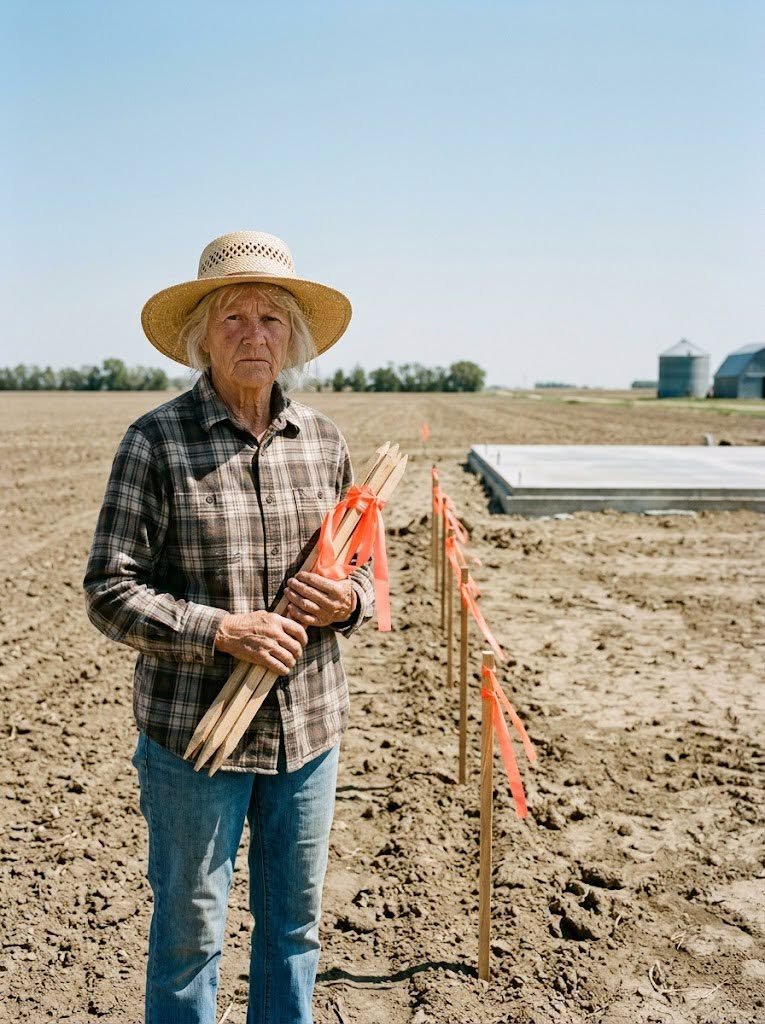
A concrete pump stood beside the old machine shed, its long metal arm stretched over the pasture. Two men were guiding a thick black hose while another checked something on a clipboard. Fresh concrete covered a section of ground where my husband, Carl, had kept his tools for thirty-seven years.
Brian stood near the fence with his hands in his pockets, talking to a man in a white hard hat.
I stopped walking.
Nobody had asked my permission to pour concrete on my farm.
“Brian?”
My son turned. For a moment, I saw something cross his face. Surprise, perhaps. Or the look a person gets when a plan has gone wrong at the very last minute.
“Mom. I thought you were going to be in Bedford all day.”
“I was. I had my eyes checked. They still work well enough to see three concrete trucks in my driveway.”
The man in the hard hat looked down at his clipboard.
Brian came toward me, lowering his voice as if that would make the conversation less serious.
“It’s nothing for you to worry about. We’re improving the property.”
“Which property?”
He glanced toward the pasture.
“This one.”
I looked at the wet concrete, then at the men working around it.
“This is my farm, Brian.”
“I know that.”
“Then you know why I’m asking.”
He rubbed his forehead. He had done that since he was a boy, whenever he was trying to explain something he knew I wouldn’t like.
“It’s a business opportunity, Mom. I’ve been talking to some people. There’s money in it, and the land is just sitting here doing nothing.”
I looked beyond him at the fields Carl had planted, the fence posts he had replaced by hand, and the barn roof we had patched ourselves one summer because we couldn’t afford to hire anyone.
The land wasn’t doing nothing.
It had fed us. It had raised our children. It had paid the bills when Carl’s back gave out and the hospital expenses started arriving faster than the harvest checks.
But I didn’t say any of that.
I asked one question.
“Who told you that you could do this?”
Brian’s eyes moved toward the man in the hard hat.
Nobody answered.
I took a step closer. “Who signed the agreement?”
“Mom, please. Don’t make this difficult.”
“I’m not making anything difficult. I’m asking who signed it.”
The man in the hard hat finally spoke.
“Ma’am, we were told the owner had approved the work. We received a signed authorization and a deposit.”
I felt the ground shift beneath me, though I was standing perfectly still.
“A signed authorization from whom?”
He looked at Brian.
That was answer enough.
I turned back to my son.
“Did you sign my name?”
“It’s not like that.”
“Did you?”
He exhaled sharply. “I handled the paperwork. The company needed someone to move things along. You’re always saying the farm needs repairs, and this could finally bring in some real money.”
“By pouring concrete over my pasture?”
“It’s an access pad. The plan is to lease part of the property to a storage company. They need a place for their equipment.”
I stared at him.
A storage company.
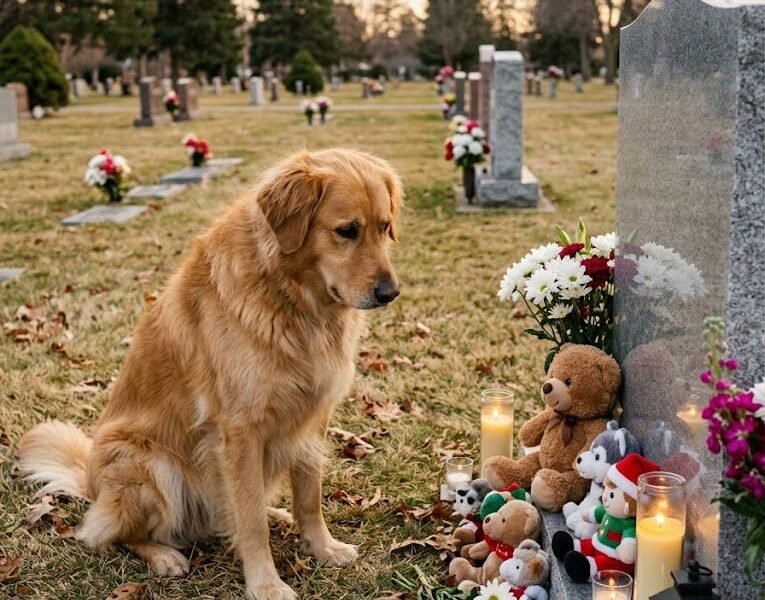
On the land where Carl had once built a small shelter for calves during a late spring storm. On the ground where our daughter, Emily, had learned to ride a bicycle. On the stretch of pasture where I had scattered Carl’s ashes beneath the old oak after the funeral, because he had told me for years that he wanted to remain on the land he loved.
Brian knew all of that.
He had been there for every part of it.
“You didn’t think I deserved to know?” I asked.
“It’s a business decision.”
“No. It’s my decision.”
He shook his head. “You’re seventy-one, Mom. You can’t keep running this place forever. The farm is too much work, and the taxes keep going up. I’m trying to protect your future.”
There it was.
The sentence people use when they want to take control of something and make you feel ungrateful for resisting.
I had heard versions of it before, usually from people who thought getting older meant becoming incapable of making decisions.
I was seventy-one. My knees hurt when it rained. I needed stronger glasses for reading fine print. I had started writing appointments on the kitchen calendar because I no longer trusted myself to remember every date.
But I still knew what belonged to me.
And I still knew the difference between help and permission.
“Stop the work,” I told him.
Brian looked at the crew.
“Mom—”
“Stop it. Now.”
The man in the hard hat made a call. The concrete pump slowed, and the workers began moving away from the fresh pour.
Brian’s face hardened.
“You’ve just cost me a lot of money.”
I almost laughed, but there was nothing funny about it.
“You’ve cost yourself money by making promises with property you don’t own.”
He stepped closer. “You don’t understand what I’ve arranged.”
“Then explain it to me.”
He wouldn’t look at me.
I asked the contractor for a copy of the authorization and any documents identifying the land involved. He hesitated, clearly uncomfortable, but after I explained that I had never approved the project, he agreed to provide the paperwork and contact his office.
I didn’t accuse anyone of a crime. I didn’t threaten to ruin my son’s life. I simply asked that no more work be done until ownership and authorization could be verified.
Then I walked back to the house.
My good shoes were ruined. Mud covered the hems of my trousers, and my hands were trembling by the time I reached the kitchen.
I sat at Carl’s old table and called my attorney.
She had handled the estate after Carl died. She knew the farm records, the deed, and the arrangements we had made to ensure the property remained mine for as long as I wanted it.
I explained what had happened.
She listened without interrupting.
When I finished, she asked me to send her copies of any documents the contractor had provided and told me not to sign anything or agree to any new arrangement until she had reviewed the situation.
Then she asked a question that made my stomach tighten.
“Has Brian ever had authority to sign documents on your behalf?”
“No,” I said. “Never.”
“Good. Let’s establish exactly what was submitted.”
Over the next two days, the pieces came together.
The proposed lease was more extensive than Brian had admitted. It covered more than the small patch beside the machine shed. The plan included a gravel access road, a fenced equipment yard, and a long-term lease that could interfere with my ability to use part of the farm.
The paperwork also contained a signature that appeared to be mine.
It wasn’t.
My attorney arranged for the relevant parties to be notified that I disputed the authorization. The contractor suspended the project while the documents were reviewed, and the proposed lease was put on hold.
There were questions about the deposit, the work already completed, and who would be responsible for the damaged ground. Those questions would take time to resolve.
But the immediate danger had passed.
No more concrete was poured.
Brian didn’t come to see me that evening. He didn’t call the next morning, either.
On the third day, he arrived just before sunset.
I was sitting on the porch, watching rain settle into the ruts left by the trucks.
He stood at the bottom of the steps for a long time before speaking.
“Are you really going to take this that far?”
I set my cup on the railing.
“Brian, it already went that far when the trucks arrived.”
He looked toward the pasture.
“I was trying to do something good.”
“Then why didn’t you ask me?”
He had no answer.
I told him I understood that the farm was expensive. I understood that he worried about my future, and I understood that he wanted to make something of his own.
But those things didn’t give him the right to decide what happened to my land.
“If you want to discuss a business proposal,” I said, “bring me a proposal. Put the numbers on paper. Tell me what you want, what it will cost, and what I stand to gain or lose. I’ll listen.”
He looked at me then.
“But you don’t get to make decisions for me just because you think I’m getting old.”
His eyes filled, though he turned away before the tears could fall.
For the first time since I had come home from Bedford, I saw something other than anger in his face.
I saw embarrassment.
And perhaps, beneath it, the realization that he had mistaken my trust for permission.
“I didn’t think you’d agree,” he finally said.
“That was your decision to make, wasn’t it? You decided my answer before you ever gave me the chance to speak.”
He sat on the step below me.
We didn’t solve everything that evening. There were still legal questions, financial losses, and conversations neither of us wanted to have. Trust, once damaged, doesn’t return simply because someone says they’re sorry.
But the next morning, Brian came back with a shovel.
He spent several hours helping repair the gate the trucks had knocked crooked. He didn’t ask me to forgive him, and I didn’t pretend the problem was over.
We worked in silence for a while, the way people sometimes must when words have done enough damage.
Eventually, he looked across the pasture.
“Dad would have been furious.”
I pressed the shovel into the earth.
“Your father would have asked me what I wanted before he ever picked up a tool.”
Brian nodded.
That was all he said.
The concrete remained where it had been poured, a gray scar beside the old machine shed. It would take money and work to put the ground right again. Some things cannot be undone as easily as they are started.
But the farm was still mine.
And so were my decisions.
That evening, I walked down to the old oak where Carl’s ashes rested. The rain had washed the dust from its bark, and the pasture smelled of wet earth.
I thought about the three concrete trucks, the ruined path, and the moment I had realized that my own son might be willing to make a future for himself out of a life I had spent decades building.
Then I thought about the lesson I wished I had taught him sooner.
Love does not mean handing over the keys to your life.
Family does not erase the need for boundaries.
And growing older does not mean your voice becomes less important.
Sometimes, the hardest thing a mother can do is tell her child no.
Sometimes, it is the only way to protect what she has spent her whole life saying yes to.
If you were in my position, would you give Brian another chance to earn your trust, or would you keep every future decision about the farm strictly in your own hands?