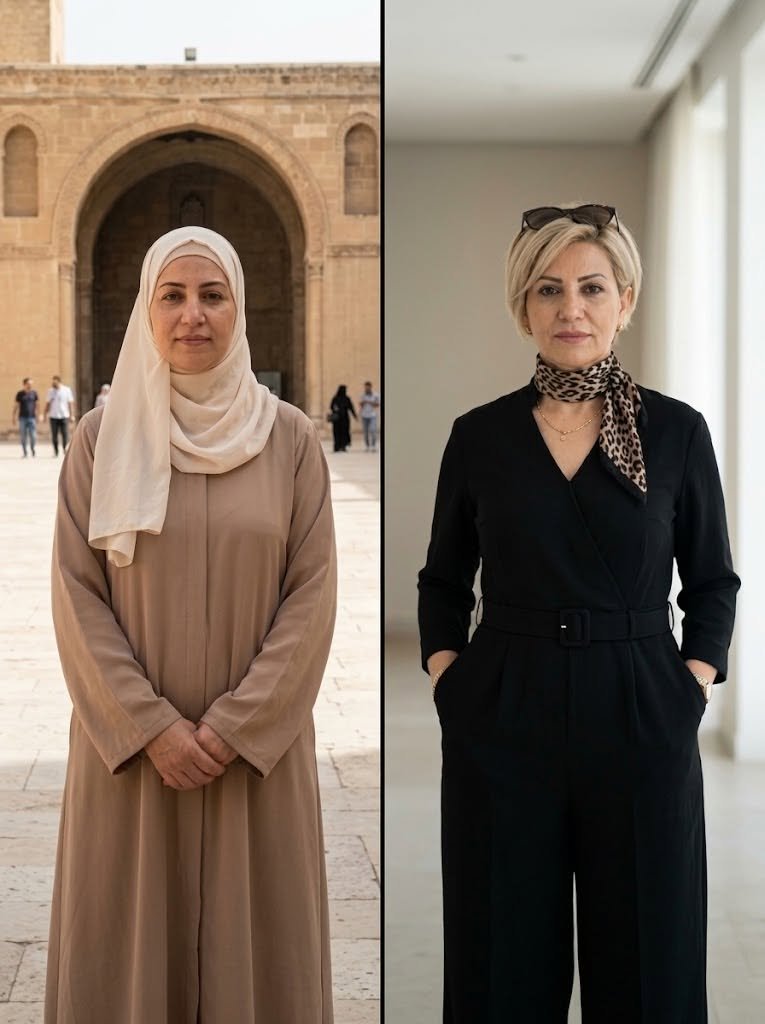
I believed coming back after forty years would mean confronting old memories. I never imagined I would be greeted by police at the airport or taken to a house that had been waiting for me all these years.
“We’ve been waiting for you.”
The officer spoke while holding my passport.
For a moment, I wondered if I had heard him correctly.
I had just stepped out of the arrivals terminal in Casablanca after spending nearly four decades abroad.
Three police cars were lined up beside the curb.
Two uniformed officers stood nearby.
A third was examining my passport.
“Waiting for me?”
He studied the photograph.
Then he looked directly at me.
“Samira?”
My stomach knotted.
“Yes.”
“Come with us, please.”
I tightened my grip on my suitcase handle.
“Am I being arrested?”
“No.”
“Then why are there three police cars?”
The officer paused.
Behind me, travelers streamed out of the terminal.
Families embraced. Drivers held up signs.
Children threw their arms around grandparents they had not seen for months.
Nobody appeared to notice the sixty-year-old woman standing beside her suitcase, wondering whether something she had done at nineteen had finally caught up with her across an ocean.
“How did you know I was arriving?” I asked.
The officer offered no explanation.
Instead, he pulled open the back door of one of the cars.
“We have to take you somewhere.”
“Where?”
“Please.”
Somehow, that single word terrified me more than a direct command would have.
My name is Samira.
I was nineteen when I left Morocco.
I carried one suitcase.
Two hundred and forty dollars.
And a plane ticket my mother had secretly kept hidden from my father.
Three nights before my wedding, she woke me at four in the morning.
She didn’t switch on the bedroom light.
Instead, she sat beside me and covered my mouth with her hand before I could say anything.
“Listen.”
I remember that word as clearly as if she had spoken it yesterday. Not because she whispered.
But because my mother was rarely the kind of woman who gave orders.
My father had always done enough of that for both of them.
She placed an envelope in my hands.
Inside was a plane ticket.
Casablanca to New York, followed by a flight to Chicago.
I stared at her in disbelief.
“What is this?”
“You’re leaving in an hour.”
For a moment, I thought she had gone mad.
“Mama—”
“Be quiet.”
My wedding gown hung in the adjoining room.
My father had already accepted presents from Hassan’s family.
The invitations had been sent.
Everyone in our neighborhood knew about the wedding.
Hassan was thirty-six, while I was only nineteen.
He owned properties, imported machinery, and possessed the kind of wealth that made grown adults call unpleasant situations “wonderful opportunities.”
I had met him just four times.
During our third meeting, he informed me that after our marriage, I would have no reason to continue studying nursing.
I told him, “I want to become a nurse.”
He smiled at me.
“You’ll change your mind once you’re my wife.”
That evening, I pleaded with my father.
“Please, call off the wedding.”
His expression immediately hardened.
“You’re making a fool of yourself.”
“I don’t love him.”
“You know nothing about love.”
“I don’t want to marry him.”
“You will.”
That was the end of the conversation.
My mother said very little.
Three nights later, she was placing an airline ticket in my hands.
I whispered, “What will happen to you?”
Her expression shifted.
“Don’t ask me that.”
“If Baba discovers what you’ve done—”
“He will.”
“I can’t leave you behind.”
She seized my wrist. For the first time in my life, I saw genuine anger in my mother’s eyes.
“Samira, if you stay here for my sake, then everything I’ve done will have been for nothing.”
I couldn’t understand what she meant. I didn’t question her further.
I wish I had.
She helped me gather my belongings.
Then, standing at the front door, she pressed her forehead against mine.
“Go to America.”
Tears streamed down my face.
“Mama.”
“And never come back.”
Those were the last words I ever heard her speak to me in person for the next forty years.
I made a life for myself in Chicago.
It wasn’t easy, and I didn’t accomplish everything overnight.
But I made it work.
I completed nursing school and worked night shifts.
I married a man named Peter, who found my stubbornness amusing rather than disrespectful.
We raised two daughters and eventually welcomed three grandchildren.
My father never spoke to me again. My mother, however, continued writing.
Initially, her letters arrived through my cousin because she feared my father might discover them.
She rarely mentioned Hassan.
Only once did she write, “He’s furious, but even anger eventually wears itself out.”
I trusted her words.
The years slipped by. My father passed away. Then Peter.
And two years ago, my mother died as well.
I didn’t return for her funeral.
I came close. I even purchased a ticket, but eventually canceled it.
As you grow older, cowardice can hide behind all kinds of respectable excuses.
Work. Timing. Responsibilities. Grief.
The truth was that every time I considered returning, I felt like that frightened nineteen-year-old girl all over again.
Then my younger sister, Leila, called me.
“Samira, you have to come home.”
“I can’t.”
“You can.”
“Why now?”
She remained silent for a long moment.
“Mama left something for you.”
“What did she leave?”
“I can’t send it to you.”
“Why not?”
“Because I promised her I wouldn’t.”
That sounded exactly like our mother.
“What is it?”
Leila lowered her voice.
“Come home.”
So I returned.
And now I was sitting in the back of a police car.
Forty minutes after leaving the airport, we entered a neighborhood I could barely recognize.
Casablanca had transformed.
Naturally, it had.
Four decades are more than enough time for a city to change beyond recognition.
Then the car slowed, and I leaned forward.
“No.”
The officer turned to look at me.
I recognized the house immediately. It seemed much smaller than I remembered.
White walls faded with age. Green shutters. An iron balcony above the entrance.
My parents’ former home.
I had not seen it since the morning I escaped.
“Why are we here?”
The officer stepped out of the vehicle. My hands felt frozen, and I couldn’t bring myself to move.
Then the front door swung open.
Leila walked outside.
For a moment, I barely recognized her.
She had been sixteen when I left. Now, most of her hair had turned gray.
When she saw me, she covered her mouth with one hand.
“Samira.”
I climbed out of the car.
We stood facing each other.
Then she pulled me into such a tight embrace that my glasses shifted out of place. Before I could stop myself, tears began falling.
When we finally separated, I turned toward the officers.
“Why are the police involved?”
Leila’s expression suddenly changed.
“Come inside.”
“No.”
“Samira.”
“Why were they waiting for me?”
She glanced toward one of the officers. He gave her a small nod.
Leila reached for my hand.
“Because someone else knew you were coming.”
A chill ran through my entire body.
“Who?”
She said nothing.
Inside, the house carried almost the same familiar scent.
Polished wood. Tea. Something that had been fried earlier.
My mother’s blue ceramic bowl remained on a shelf.
I reached out and touched it.
Then a man’s voice came from the sitting room.
“She has arrived.”
My entire body went rigid.
I knew that voice.
It was older now, rougher than before, but unmistakable.
A man slowly rose from an armchair.
White hair. A dark suit. A walking cane resting beside him.
Hassan.
For a moment, I was nineteen again, transported back to the past so suddenly that I struggled to breathe.
He studied me for several seconds.
Then he smiled.
“Samira.”
I instinctively stepped backward.
One of the officers moved closer to me.
“Why is he here?”
Hassan’s smile disappeared.
Leila explained, “He arrived this morning.”
“How did he know?”
Neither of them answered.
I turned to face Hassan.
“You knew I was coming?”
He struck the floor once with his cane.
“I’ve known for several weeks.”
I looked at Leila.
“Did you tell him?”
“No.”
“Then who did?”
Hassan answered quietly.
“Your mother.”
Silence filled the room.
I stared at him in disbelief.
“My mother is dead.”
“Yes.”
“What are you talking about?”
He reached inside his jacket.
The officer immediately stepped forward.
Hassan froze.
“It’s only a letter.”
He handed it to the officer, who then passed it to me.
My name was written across the envelope.
In my mother’s unmistakable handwriting.
Samira.
Beneath my name were the words: “To be opened only when she returns home.”
My hands began trembling.
I turned toward Leila.
“Mama gave this to you?”
She nodded.
“And she gave him one, too.”
I turned toward Hassan.
“Why?”
“Read yours.”
I hated being told what to do by him. Even after forty years, it still bothered me.
For a moment, I considered refusing. Then I ripped open the envelope.
The letter began with two words.
“My Samira.”
“If you’re reading this, it means you returned despite my telling you never to come back.”
I lowered myself into a chair.
The letter was four pages long. At first, I hurried through the words.
Then I began reading more carefully.
My mother revealed something I had never known.
The night she sent me away, she hadn’t made a last-minute decision.
She had been preparing my escape for nearly three months.
She sold two gold bracelets and borrowed money from an aunt.
She arranged my American visa through a distant cousin.
She kept every detail hidden from my father. But that wasn’t the reason the police had been waiting for me.
I found the answer on the second page.
Hassan had discovered her plan before I left.
I stopped reading.
“What?”
He remained perfectly still.
I looked straight at him. “You knew?”
“Not everything.”
According to the letter, Hassan had overheard my parents arguing two days before my escape.
He realized my mother was trying to get me out of Morocco.
Rather than telling my father, he approached her privately.
I stared at Hassan in disbelief.
“You knew I was planning to run away.”
He nodded.
“Yes.”
“Then why didn’t you stop me?”
His lips tightened.
“Because I was thirty-six years old, preparing to marry a nineteen-year-old girl who looked frightened whenever I walked into a room.”
His response was the last thing I had expected.
I lowered my eyes to the letter again.
My mother explained that Hassan had provided the remaining money she needed to purchase my ticket.
I read that sentence three times.
“No.”
Leila sat down beside me.
“It’s true.”
I turned toward Hassan.
“You helped me escape from you?”
He let out a bitter laugh.
“Partly.”
“Why would you do that?”
He stared down at the floor.
“Because your father told me something.”
“What did he say?”
“He told me that once we were married, you would learn to settle down.”
I waited for him to continue.
Hassan went on.
“He said that if you continued resisting, I should make you understand that you belonged to your husband.”
My stomach twisted.
“He actually said that?”
“Yes.”
Hassan met my eyes.
“For months, I convinced myself that the marriage was acceptable because our families supported it. Because it was considered normal in our society. Because you were young and would eventually adjust.”
His voice became quieter.
“Then your father said those words, and I finally understood what kind of man I was becoming.”
Nobody said anything.
I continued reading. My mother’s letter contained more revelations.
After I escaped, my father blamed her.
For years, he held her responsible.
He controlled her finances.
He prevented her from visiting relatives without permission. He even opened her letters.
Hassan attempted to interfere once.
My father threw him out of the house.
I looked at Leila.
“Why didn’t anyone tell me about this?”
“Mama wouldn’t allow us to.”
“Why not?”
Her eyes filled with tears.
“Because she knew you would return someday.”
That sounded exactly like our mother.
I continued reading.
Toward the end, my mother finally explained why the police had been waiting at the airport.
Years after my father passed away, Hassan discovered that one of his relatives had preserved copies of old complaints my father had filed against me after I fled.
He had accused me of stealing family jewelry.
Money. Documents.
None of the accusations were true.
Most of the complaints were decades old and no longer carried any legal significance.
However, one record had never been officially closed.
Before asking me to return, Leila had contacted a lawyer.
The lawyer then reached out to the police.
They agreed to meet me at the airport, confirm my identity, and escort me directly to the house. Hassan had insisted on formally withdrawing the last statement associated with the old complaint while I was present.
I lowered the letter.
“So you arranged three police cars to meet me over some paperwork?”
One of the officers nearly smiled.
Leila explained, “We weren’t sure whether that old file might cause trouble when you arrived at passport control.”
“You could have warned me.”
“Mama specifically told us not to.”
I stared at her.
“Our mother has been dead for two years, and she’s still planning my travel arrangements?”
Leila laughed through her tears.
“Apparently, yes.”
Even Hassan smiled.
I didn’t. Not yet.
I looked directly at him.
“Why are you doing all this now?”
He rested his weight on his cane.
“Because your mother asked me to.”
“Is that the only reason?”
“No.”
Suddenly, he looked much older.
“For years, I convinced myself that I had done the honorable thing by helping you leave.”
He paused before continuing.
“But I had already agreed to marry you before I helped you escape that marriage.”
That admission mattered to me. A part of me had already begun turning him into some kind of secret hero.
He wasn’t one. And he seemed to understand that himself.
“I was willing to marry you even after you had made it clear you didn’t want to,” he continued. “Nothing I did afterward changes that.”
I carefully folded the letter.
For the first time that day, I could breathe without feeling as though something was crushing my chest.
The officers remained while Hassan signed several documents.
I signed a statement confirming that I had not taken any jewelry or family money beyond what my mother had provided and that I had left Morocco voluntarily.
The entire situation felt ridiculous.
Forty years too late.
But when the officer finally closed the file, he told me, “This matter is now resolved.”
I began to cry.
Not because I had genuinely feared going to prison.
Not exactly.
I cried because I hadn’t realized that somewhere deep inside me, I still believed I was a runaway girl who could be forced back home.
That evening, Leila led me upstairs.
My childhood bedroom had become a storage room. The wallpaper had disappeared, and my desk was gone.
But a small brown suitcase remained inside the closet.
My suitcase.
The one I had left behind.
Leila opened it.
Inside lay my wedding dress, still carefully wrapped in paper.
I couldn’t bring myself to touch it.
“Mama kept it all these years?”
“Yes.”
“Why would she keep it?”
Leila handed me another note.
It contained just one sentence.
“You were never wrong to leave.”
I sank to the floor.
For forty years, I had wondered whether my mother regretted helping me escape.
Whether she blamed me for everything that followed. Whether she wished I had simply obeyed my father and made everyone’s lives easier.
Now she had finally given me an answer. I just hadn’t been there to hear it.
I remained in Morocco for three weeks. I visited my parents’ graves.
Leila and I argued about the forty years of birthdays we had missed together.
We cried. We laughed. We grew angry with each other.
Then we cried some more.
Before leaving the country, I met Hassan one final time.
We met at a café.
He was approaching eighty.
He asked about my daughters, and I showed him their photographs.
He smiled.
“You became a nurse.”
“Yes.”
“Your mother always said you would.”
I studied his face.
“Did you ever get married?”
“Eventually.”
“Were you happy?”
He thought about it for a moment.
“Some years.”
His answer made me laugh.
Before we went our separate ways, he said, “I’m sorry, Samira.”
I understood what he was apologizing for.
Not for helping me escape.
But for agreeing to a marriage that should never have been forced upon me in the first place.
“I know.”
It wasn’t exactly forgiveness.
But it was enough for me.
When I arrived back in Chicago, my eldest daughter was waiting to pick me up at the airport.
She wrapped her arms around me and asked, “Well? Do you regret going back?”
I thought about the police cars. Hassan. The wedding dress. My mother’s letter.
Then I answered, “No.”
For forty years, I had believed my mother saved my life by telling me never to return home.
At last, I understood that she had never intended for me to stay away forever.
She wanted me to remain gone long enough to build a life in which nobody else could decide my future for me.
And when I finally returned, what awaited me wasn’t punishment.
It was the realization that the frightened nineteen-year-old girl who had run away was never the person who deserved to feel ashamed.
If you uncovered a family secret like this after forty years, would you want to know every detail, or do you think some truths come too late to make a difference?
Think this family’s secret was difficult to uncover? Another family spent ten years searching for answers about a teenage girl who had disappeared. Then, one day, she unexpectedly appeared at their doorstep and pointed directly at her stepfather. The truth that followed changed everything.