My Son Returned From Vacation and Discovered That I Had Sold the Lake House He Thought Would Always Be His
“Mom, why doesn’t my key work?”
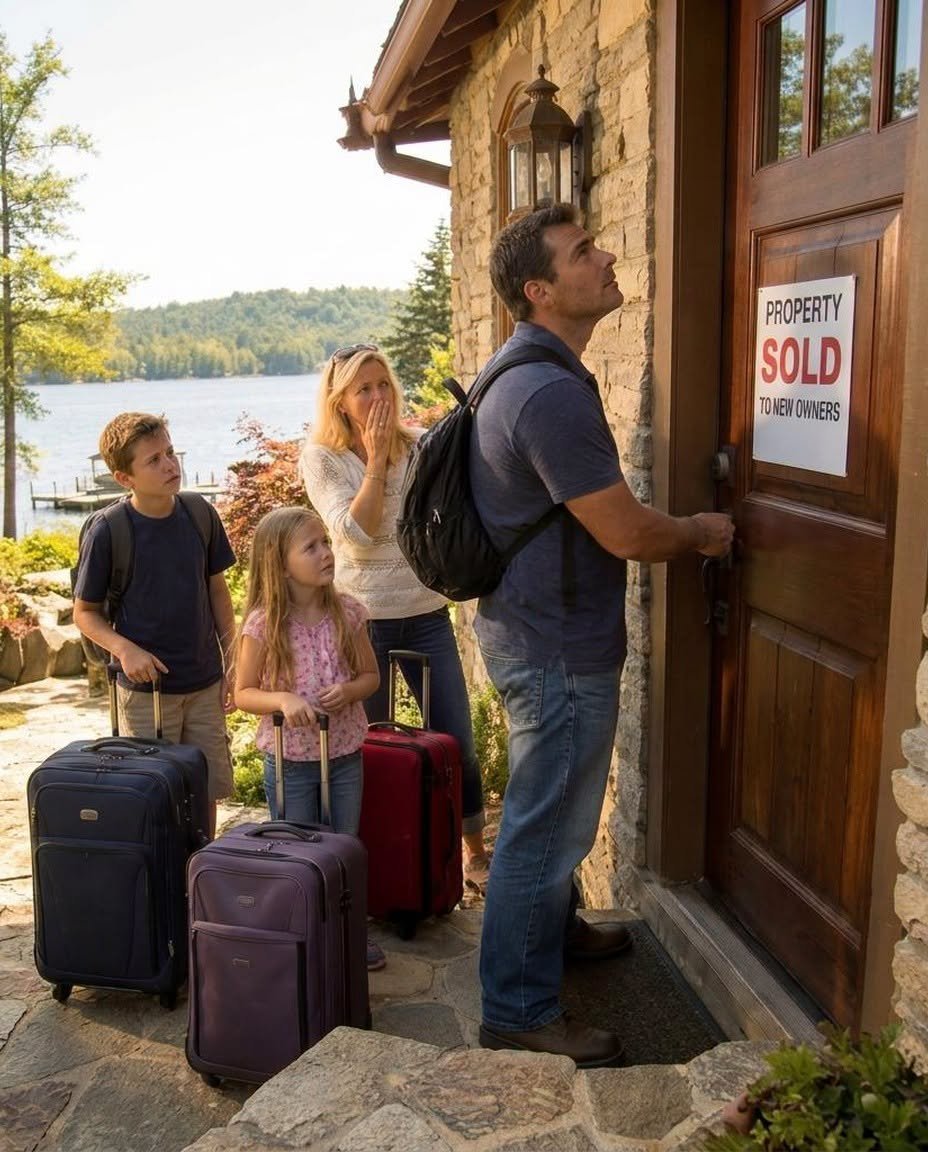
My son’s angry voice came through the phone as he stood outside the lake house where he’d grown up. He had just returned from a seven-day Caribbean cruise with his wife, two children, and his in-laws, expecting everything to be exactly as he’d left it.
Instead, an unfamiliar woman opened the front door and politely explained that she and her husband now lived there.
My son, Patrick, immediately demanded an explanation.
I was twenty minutes away, sitting in my new apartment with a cup of tea, listening to the confusion. At seventy-one, after forty years of marriage and a lifetime of putting everyone else first, I had finally made a decision for myself.
And Patrick had no idea what was coming next.
For nearly four decades, that lake house had been the heart of our family. My late husband, Robert, and I had bought it when Patrick was just three years old. It wasn’t luxurious, but it had a wide wooden deck, a stone fireplace, and a private dock where we spent countless summer evenings watching the sunset.
Patrick learned to swim there. He caught his first fish from that dock. When he became a father, he brought his own children there, telling them the same stories his father had once told him.
After Robert died, I kept the house exactly as it was.
I paid the taxes, arranged repairs, hired someone to maintain the property, and spent many weekends there alone. I thought preserving the house would help preserve the memories of the man I had loved for most of my life.
But gradually, something changed.
Patrick began treating the house as though it already belonged to him.
He started making plans without asking me. He invited his in-laws to stay for entire weekends. His wife, Melissa, began discussing renovations, replacing furniture, and rearranging rooms.
At first, I told myself that this was simply what families did. I wanted my grandchildren to enjoy the house, and I didn’t want to become the kind of mother who turned every family gathering into an argument.
Then, one afternoon, I overheard a conversation that changed everything.
Patrick was talking to Melissa on the deck. He didn’t know I was inside the kitchen, just a few steps away.
“Once Mom gets older, we’ll have to take over everything anyway,” he said. “It makes sense to start planning now. The kids will need more space, and this place is perfect for us.”
Melissa agreed.
Then Patrick added something that made my stomach tighten.
“Honestly, she doesn’t even use it that much anymore. She should just let us have it.”
I stood perfectly still.
He hadn’t asked whether I wanted to sell it, give it away, or continue living there. He had already decided that my future was something he could organize around his own convenience.
That evening, I sat beside the fireplace and looked at the framed photograph of Robert holding a tiny Patrick on the dock.
I remembered the sacrifices we had made to buy that property. The extra shifts Robert had worked. The vacations we had skipped. The years we had spent saving every spare dollar.
The house wasn’t just a building.
It represented our work, our dreams, and the life we had built together.
And I realized that I had spent so long trying to keep everyone happy that I had forgotten I was still allowed to make decisions about my own life.
The next morning, I called a real estate agent.
I didn’t rush into anything. I reviewed my finances, considered my living arrangements, and spoke with an attorney about the sale. I wanted to be certain that the decision was legally sound and that I understood every consequence.
After several weeks, I accepted an offer from a couple who had been searching for a peaceful place to retire. They loved the property for the same reasons Robert and I had loved it decades earlier.
The closing was completed before Patrick left for his Caribbean cruise.
I didn’t hide the sale to punish him. I simply chose not to ask permission to make a decision that belonged to me.
I moved into a smaller apartment near the hospital where I volunteered twice a week. It had large windows, a little balcony, and enough room for my grandchildren to visit comfortably.
For the first time in years, I wasn’t responsible for maintaining an aging property or worrying about who expected to use it next.
I could wake up whenever I wanted. I could travel. I could spend my money on experiences rather than repairs.
I felt lighter than I had in a very long time.
Then Patrick returned from his vacation.
“Mom, what is this woman talking about?” he demanded over the phone. “She says she bought the house. How can someone buy our lake house?”
“Our lake house?” I asked quietly.
There was a pause.
“You know what I mean. The house where we grew up. The house the kids love. You can’t just sell it without telling me!”
I took a slow sip of tea.
“Patrick, I sold my house.”
“But you knew we were coming back today!”
“I knew you were returning from your vacation. I didn’t know you expected to move straight into a property you no longer owned.”
His voice grew louder.
“You should have talked to me first!”
I looked out my apartment window at the trees moving gently in the afternoon breeze.
“Why, Patrick? So you could tell me what I was allowed to do with my own property?”
He fell silent.
Then he said the words I had been dreading.
“Where are we supposed to go now? Melissa’s parents are with us, and the kids were expecting to stay there!”
I closed my eyes briefly.
“You have your own home, Patrick. The lake house was never your permanent residence. You were welcome to visit because I invited you. That was a privilege, not a promise that you would inherit it before I was ready.”
He insisted that I had embarrassed him in front of his in-laws. He accused me of being selfish and claimed that I had taken something precious away from his children.
I listened without interrupting.
When he finally stopped, I spoke softly.
“Your children haven’t lost their grandmother. They can still visit me. We can make new memories together. But I will not spend the rest of my life preserving a house simply because you expect to own it someday.”
For a moment, neither of us spoke.
Then Patrick hung up.
The days that followed were difficult. Melissa sent messages about how unfair the situation was. Patrick refused to answer my calls. I missed my grandchildren terribly, and there were evenings when I questioned whether I should have handled everything differently.
But whenever doubt crept in, I remembered that conversation on the deck.
I remembered how casually my son had discussed my future as though I were no longer capable of deciding it for myself.
I also remembered Robert’s words from years earlier, when we had discussed retirement.
“Promise me something,” he had said. “Don’t spend your whole life taking care of everyone else and forget to live your own.”
At the time, I had smiled and told him he was worrying about nothing.
Now I understood.
Three weeks later, my phone rang.
It was Patrick.
His voice was quieter than it had been that afternoon.
“Mom, can we talk?”
I agreed.
He came to my apartment the following Sunday, alone. He looked around the small living room, noticed the photographs on the shelves, and sat down across from me.
For a while, he said nothing.
Then he finally admitted that he had assumed the lake house would eventually become his. He had imagined raising his children there during summers, just as I had raised him. Somewhere along the way, that expectation had become so strong that he had stopped thinking of the house as mine.
“I guess I never considered that you might want something different,” he said.
I reached for his hand.
“That’s exactly the problem, sweetheart. You were thinking about what you wanted, but you forgot to ask what I wanted.”
His eyes filled with tears.
“I’m sorry.”
I believed he meant it, although I knew one apology wouldn’t undo years of assumptions. Trust would have to be rebuilt through actions, not promises.
We talked for hours. I explained how exhausting it had become to feel that every decision I made had to fit someone else’s plans. He admitted that he had confused being close to me with having a claim over my life.
We didn’t solve everything that afternoon.
But when he left, he hugged me for the first time since the sale and promised to bring the children over the following weekend.
And he did.
My grandchildren ran through my apartment, laughing and asking whether they could help me bake cookies. They didn’t care about the lake house nearly as much as their father had imagined. They were happy to be with me.
That evening, as I watched them play on the balcony, I realized that the memories we had made at the lake house would always belong to us.
No sale could erase them.
No change of address could take away the love I had for my family.
And no one—not even my own child—had the right to decide that my life was finished simply because I had grown older.
At seventy-one, I had learned a lesson that took me far too long to understand:
Being a loving mother doesn’t mean surrendering ownership of your future. You can love your children deeply, support them wholeheartedly, and still say no when their expectations begin to overshadow your own needs.
I didn’t sell the lake house because I stopped loving my family.
I sold it because I finally understood that I deserved to live my life, too. ❤️