When a woman I had never met started picking up my grandchildren from school, I feared someone was trying to take them from my son. But the photograph she left behind revealed a secret about my late daughter-in-law—and the truth was far more painful than I expected.
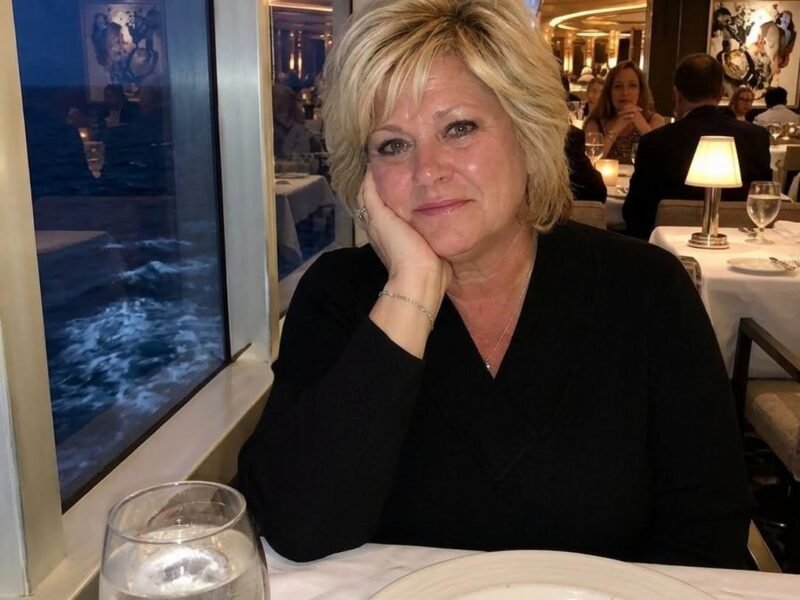
My name is Helen. I’m 65, and my son Marcus is 41.
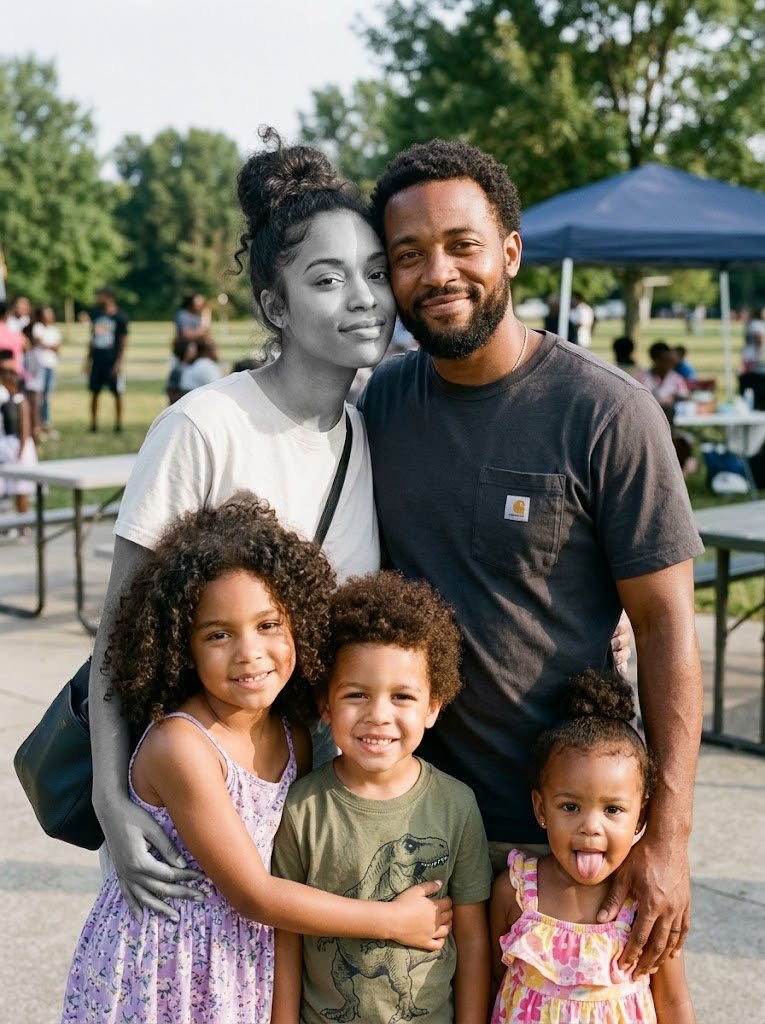
His wife, Emily, died in a car accident when their children were six, four, and two. Now Lily is nine, Noah is seven, and Sophie is five.
Marcus worked long hours, so I helped with school pickups whenever I could. After Emily’s death, I tried my best to make sure the children never felt abandoned. I cooked their favorite meals, helped with homework, and sat beside them when they cried for their mother.
But grief had changed Marcus. He rarely spoke about Emily, and whenever the children asked questions about their mother, he answered briefly before changing the subject.
I understood his pain. Losing the woman he loved had nearly broken him.
Then, one Tuesday afternoon, everything changed.
Lily came home from school carrying a small pink backpack I had never seen before.
“Grandma, a lady picked us up today,” she announced casually.
I stopped folding the laundry.
“What lady, sweetheart?”
“She said she knows Mommy.”
My heart began racing.
“What was her name?”
Lily shrugged. “I don’t remember. She had brown hair. She gave Sophie a cookie and told us she would see us again tomorrow.”
I immediately called Marcus. He sounded exhausted, but when I told him what Lily had said, his voice suddenly sharpened.
“I didn’t arrange for anyone to pick them up,” he said. “Mom, don’t let a stranger near my children.”
The following afternoon, I arrived at the school early and waited near the entrance.
At 3:10 p.m., I saw her.
A woman in her late thirties stood near the gate, holding a folded piece of paper. She looked nervous, repeatedly checking the school doors.
When the children came outside, she smiled at them.
Lily recognized her immediately and ran toward her.
I hurried over.
“Excuse me,” I said firmly. “Who are you, and why are you picking up my grandchildren?”
The woman froze.
For several seconds, she stared at me as if she had been expecting this confrontation.
“My name is Claire,” she finally said. “I knew Emily.”
“That doesn’t give you permission to take these children anywhere.”
She lowered her eyes.
“You’re right. I’m sorry. I should have spoken to you first.”
I took the children by the hands and led them toward my car. Before we left, Claire called after me.
“Please, Helen. There’s something you need to know about your daughter-in-law.”
I turned around sharply.
“How do you know my name?”
She reached into her handbag and pulled out a photograph.
It showed Emily standing beside a younger woman in front of a small seaside café. They were laughing, their arms wrapped around each other. Emily looked younger than I remembered her, with that same bright smile I had missed every day since her funeral.
Claire handed me the photograph.
On the back, Emily had written a date and a short message:
“To Claire, my sister in every way that matters. Thank you for never giving up on me.”
My fingers began to tremble.
Emily had no sister. At least, that was what Marcus and I had always believed.
“Who are you?” I whispered.
Claire’s eyes filled with tears.
“I was Emily’s best friend long before she met Marcus. We grew up together. We were inseparable.”
“Then why have I never heard of you?”
She looked toward the children, who were standing quietly beside my car.
“Because Emily and I had a terrible falling-out. And by the time I realized how much I had lost, she was gone.”
I wanted to believe her, but suspicion still filled my mind.
“What exactly happened between you?”
Claire took a shaky breath.
“Emily was pregnant with Lily when we had our argument. I was going through a difficult time, and she tried to help me. Instead of accepting her help, I said something cruel. I accused her of abandoning me for her new family.”
She wiped her cheeks.
“She told me that loving Marcus and becoming a mother didn’t mean she had stopped caring about me. But I was too angry to listen.”
“And you never reconciled?”
“I tried to call her several times. She eventually answered one night, and we spoke for a few minutes. She said she missed me, and I promised we would meet soon.”
Claire’s voice broke.
“Soon never came.”
I stared at the photograph, struggling to understand why Emily had kept this friendship hidden from us.
“Why are you here now?” I asked.
“Because I found something she left for me.”
Claire explained that after Emily’s death, she had been contacted by a mutual friend who was helping organize some of Emily’s belongings. Among them was a small envelope addressed to Claire.
Inside was a handwritten letter.
Emily had written that she hoped they would eventually forgive each other and that she wanted Claire to meet her children someday.
But there was one sentence that had haunted Claire ever since.
“If anything ever happens to me, please don’t let my children grow up believing that love disappears when someone is gone.”
Claire said she had spent months trying to find the right way to approach Marcus. She had finally located the children’s school and, believing she could introduce herself gradually, made the mistake of arranging pickups without speaking to their father.
“I wasn’t trying to take them away,” she said. “I just wanted to know the children Emily loved so much.”
I should have been relieved. Instead, I felt a strange mixture of anger, sadness, and guilt.
Emily had lived an entire part of her life that I knew nothing about.
That evening, I showed Marcus the photograph.
He stared at it for a long time.
“I remember Emily mentioning a friend named Claire once,” he admitted. “But she never told me they had fallen out.”
“Did you know she wanted Claire to meet the children?”
He shook his head.
“No.”
For the first time in years, Marcus sat at the kitchen table and talked about Emily without immediately shutting down. He told me how difficult it had been to raise three young children while trying to survive his own grief.
“I thought if I stopped talking about her, the pain might become easier,” he confessed. “But maybe I’ve made it harder for the kids to ask questions.”
I reached across the table and held his hand.
“We’ve all been trying to protect one another,” I said. “Perhaps we’ve forgotten that remembering someone doesn’t have to hurt every single time.”
The following weekend, Marcus agreed to meet Claire at our house.
She arrived carrying a small box filled with photographs, birthday cards, and handwritten notes Emily had sent her over the years.
Lily sat beside her, carefully turning the photographs one by one.
“Was Mommy happy when she was little?” she asked.
Claire smiled through her tears.
“She was the kind of person who could make an ordinary day feel special. She sang terribly in the car, burned toast almost every morning, and laughed so loudly that people in the next room would start laughing too.”
The children giggled.
For the first time in a long while, Emily’s memory filled our home with laughter instead of silence.
Over the following weeks, Claire visited only when Marcus invited her. She never again approached the children without his knowledge. Slowly, she became a trusted presence in their lives, sharing stories about their mother that none of us had heard before.
One afternoon, Lily brought me the original photograph.
“Grandma,” she said, “can we put this with Mommy’s other pictures?”
I nodded, fighting back tears.
As she placed it in the family album, I realized that the photograph had revealed something more important than a hidden friendship.
It had shown me how grief can make people afraid to open their hearts again.
I had been so frightened that someone might take my grandchildren away that I almost refused to let them discover another piece of their mother’s love.
Claire had made a serious mistake by approaching the children without permission. But beneath that mistake was a woman who had lost her best friend and spent years wishing she could turn back time.
And Marcus, who had tried to protect his children by keeping the past at a distance, was beginning to understand that they needed their mother’s memories just as much as they needed his protection.
I still miss Emily every day. Nothing can change the fact that she should be here, watching her children grow.
But now, when Lily asks what her mother was like, we don’t change the subject.
We tell her stories.
We show her photographs.
And sometimes, when Claire visits, we laugh about the little things Emily used to do.
Because I’ve learned something at 65 that I wish I had understood much earlier:
Love doesn’t end when someone dies. Sometimes, it survives in the people they leave behind—in a photograph, a forgotten letter, or a friend who finally finds the courage to come back.
And sometimes, the stranger we fear is not there to take something away from us.
Sometimes, they are carrying a piece of our past that can help our family heal.