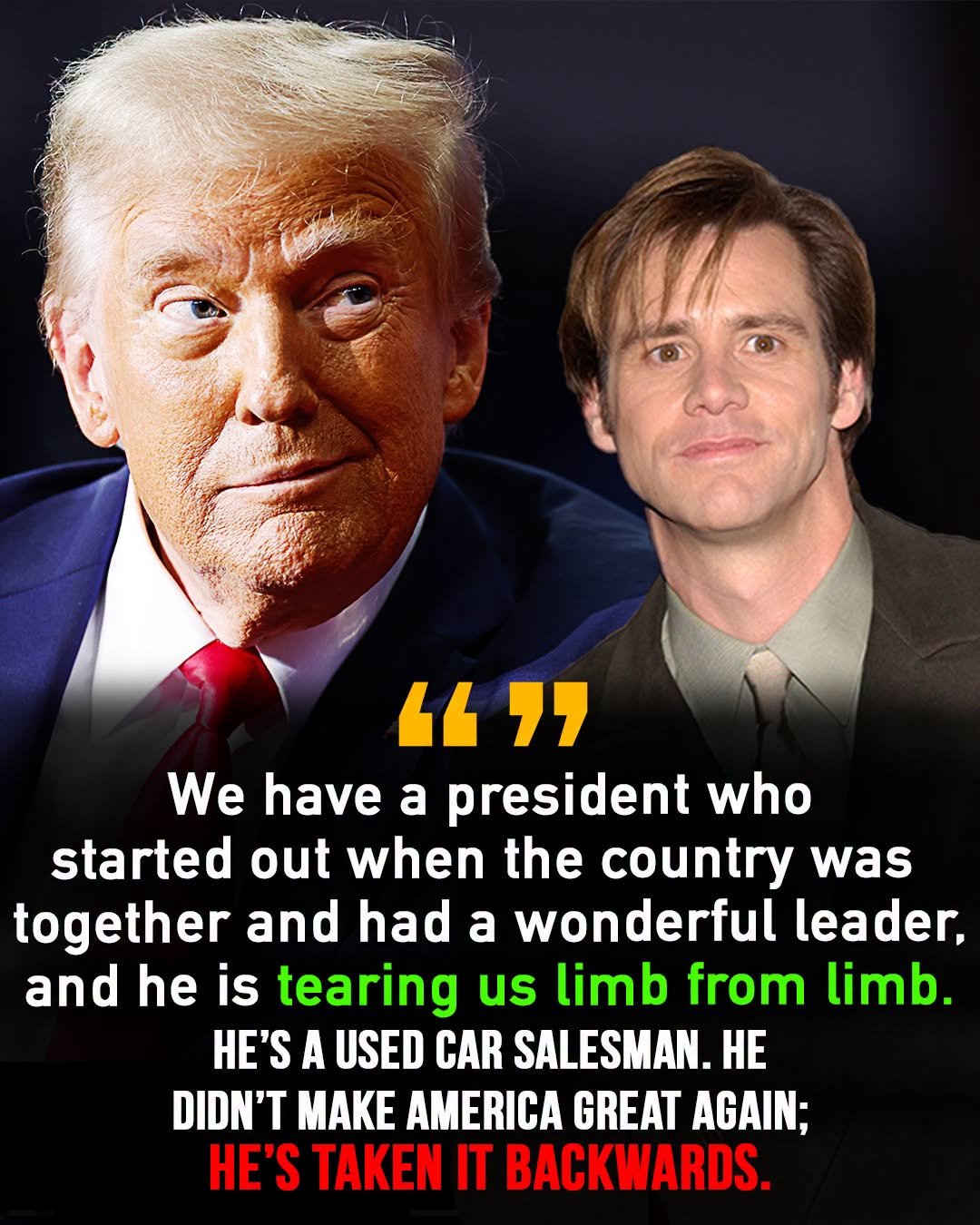
The debate over Jim Carrey’s blunt description of Donald Trump continues to resurface years after the actor first made the remark, showing how celebrity political opinions can remain part of the public conversation long after the original interview ends.
For Carrey, the comment reflected more than a passing reaction to a president. It was part of a period when he increasingly used his public platform to express his political concerns. Through his artwork, he portrayed political figures in exaggerated and often provocative ways, using satire to criticize decisions and behavior he believed deserved public scrutiny.
His exhibition, IndigNation, brought together many of those works and attracted attention beyond the art world. Carrey’s paintings and illustrations were often deliberately uncomfortable, designed to provoke discussion rather than simply entertain. While some viewers praised his willingness to speak openly, others criticized his approach and questioned whether political satire from Hollywood celebrities helped or harmed meaningful debate.
The reaction reflected a broader divide in American culture. For some people, entertainers have every right to criticize elected officials, particularly when they believe the country’s future is at stake. For others, celebrities should be cautious about using their fame to influence political discussions, especially when their comments can reach millions of people.
Yet Carrey’s supporters argue that being an entertainer does not mean giving up the right to express personal beliefs. Actors, musicians, writers, and artists have long used their work to challenge authority, question social norms, and encourage audiences to look at political events from different perspectives.
His critics, meanwhile, maintain that fame does not automatically make someone an authority on government or public policy. They believe political arguments should be judged on their substance rather than the celebrity status of the person delivering them.
That disagreement is one reason the old interview continues to attract attention whenever the clip resurfaces online. A short remark can quickly become a larger argument about leadership, political identity, freedom of expression, and the role of entertainment in public life.
Ultimately, Carrey’s description of Trump remains a personal political judgment, not an objective assessment accepted by everyone. Whether people agree with him or strongly disagree, the reaction demonstrates how a few words from a famous figure can continue to generate discussion years later.
And perhaps that is what makes the moment so enduring: it is no longer just about what Jim Carrey said in 2018. It is also about a question that continues to divide audiences today.
Should celebrities use their platforms to speak out about politics, or should they keep their political opinions private?
For many people, the answer depends on whether they agree with the message. For others, the principle matters more than the politics.