After finding out that my cancer was terminal, I decided to fulfill my dream and travel abroad for the first time — but at the airport, an employee handed me an envelope and said, “There’s something you still don’t know about this trip.”
I had never been abroad in my life.
I spent most of my life working as an elementary school teacher, and I never really had time for myself. I had two young children whom I raised on my own after my husband died.
There was never enough money or time to take even one vacation abroad.
And recently, I finally retired, hoping I could at last devote some time to myself.
But that wasn’t how things turned out.
A few months ago, my doctor gave me news that turned my entire world upside down.
They found a tumor. My cancer turned out to be terminal.
God, I was completely unprepared to hear those words.
At 68 years old, I sat in a hospital room crying because I had no idea what I was supposed to do next.
That’s when I decided that I wanted to fulfill at least one of my dreams while I still could.
I wanted to finally travel abroad.
“I’ll start with Paris,” I whispered to myself with a smile through my tears.
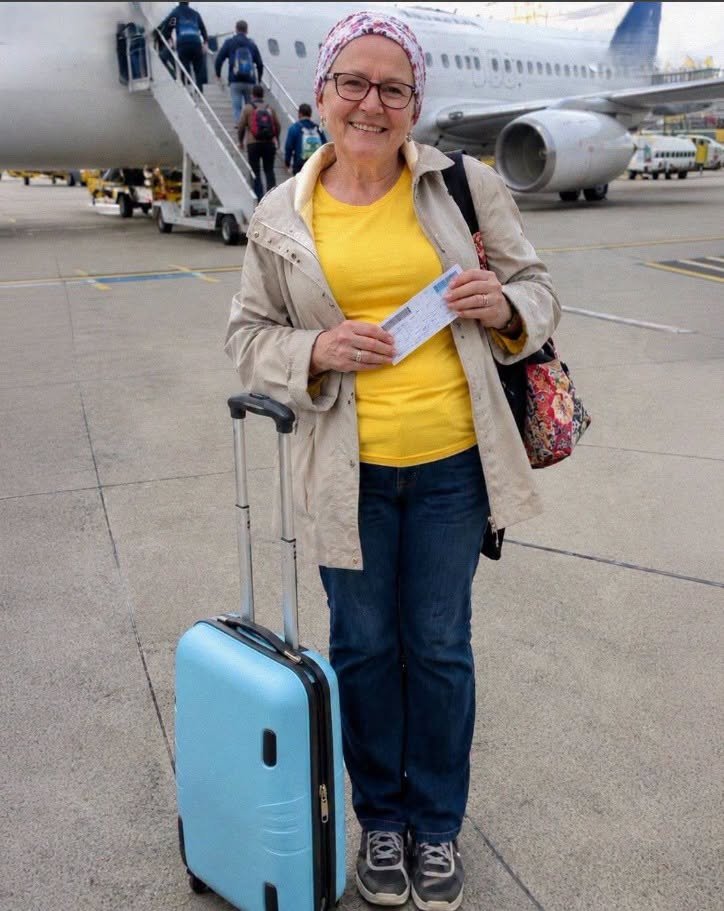
So I got my first passport, bought a ticket to France, and packed a small suitcase.
On the day of my flight, I arrived at the airport three hours early. I kept checking my passport and boarding pass over and over, afraid that I’d done something wrong.
Suddenly, a voice came over the loudspeaker:
“Mrs. Wilson, please come to the desk at your boarding gate.”
My stomach dropped.
Oh God, is something wrong with my ticket? I wondered as I hurried toward the desk.
When I got there, I asked nervously:
“Excuse me, I’m Mrs. Wilson. Is something wrong with my ticket?”
Then the airline employee looked at me and said:
“Mrs. Wilson, we’ve been waiting for you. Something was left here for you.”
I blinked.
“What’s going on?”
Then the woman reached behind the desk and pulled out an envelope with my name written on it.
I stared at it.
“Who sent this?”
The woman frowned slightly and said:
“Ma’am, there’s something you still don’t know about this trip. Someone left something special for you. Open the envelope, and you’ll understand everything.”
I grabbed the envelope, and as soon as I opened it, my hands started shaking. See more….
“Do something you’ve always wanted.”
The problem was, I had spent so much of my life caring for everyone else that I wasn’t sure what I wanted anymore.
My husband Richard had died thirty-two years earlier.
A heart attack.
Sudden.
No warning that felt sufficient.
One day he was there.
The next, I was a widow with a twelve-year-old daughter and a nine-year-old son.
Richard had been my first love.
After he died, I did what mothers do when grief does not stop the bills.
I worked.
Then worked more.
I took extra classes.
Stayed late.
Tutored children after school.
Discover more
Get Photo Storage
Find Stock Photos
Follow Stars
Emma once asked me:
“Mom, why do you work so much?”
“Because I want you and Daniel to have everything you need.”
She looked at me.
“And what about you?”
I kissed her forehead.
“I have you two.”
“That’s enough.”
Discover more
Watch TV Dramas
movie
Hair
For years, I believed that.
I kept notebooks.
At first, they were ordinary journals.
Appointments.
School memories.
Grocery lists.
Discover more
hair
Order Calendars
Stream Shows
Things the children said.
Then, after Richard died, I began writing letters to him.
Emma caught me once.
“Who are you writing to?”
“Your dad.”
She frowned.
“But he can’t read them.”
“I know.”
“But writing makes me feel like he’s still here.”
For thirty-two years, I wrote to a dead man.
I told him about graduations.
Weddings.
Daniel’s first house.
Emma’s children.
Discover more
Browse Reference
Go Stargazing
Learn a Language
My students.
My retirement.
Everything.
And for thirty-two years, I believed I had been lucky enough to have one great love, even if it ended far too soon.
Then, three months after I retired, my doctor told me I had terminal cancer.
I remember staring at him.
“Can you operate?”
He looked down.
“I’m afraid surgery won’t cure it.”
“Chemotherapy?”
“We can discuss treatment to manage symptoms.”
I knew what that meant.
“How much time?”
“I can’t give you an exact number.”
“Please don’t protect my feelings.”
He sighed.
“We may be talking about months rather than years.”
I drove home.
Then sat in my car and cried for almost an hour.
Not gracefully.
Not quietly.
I cried because I had just retired.
Because I had spent decades saying:
Someday.
Someday I’ll travel.
Someday I’ll slow down.
Someday I’ll do something just for myself.
And suddenly “someday” had become a dangerous word.
That night, I opened one of my old notebooks.
There, in faded ink, was a line Richard and I had written when we were young.
See Paris someday.
I touched the words.
Richard had always talked about Paris.
“Someday, Sparrow, I’m taking you there.”
He called me Sparrow because I never stopped moving.
I would laugh.
“With what money?”
“I’ll figure it out.”
“And where are we staying?”
“Our own apartment.”
“Obviously.”
“With a balcony?”
“Obviously.”
Then life happened.
Children.
Bills.
A mortgage.
School uniforms.
Medical expenses.
There was always a reason to wait.
Richard began traveling to Europe for work.
“Paris again?” I would ask.
“The company is expanding.”
“These trips help pay the mortgage.”
I believed him.
After he died, Paris became one of those dreams I folded away.
Until the diagnosis.
I called Emma the next morning.
“I’m going to Paris.”
Silence.
“Mom?”
“I’ve never been abroad.”
“I want to go.”
Her voice changed immediately.
“Then you’re going.”
Daniel offered to come.
“Mom, you shouldn’t travel alone.”
I laughed.
“Daniel, I taught thirty eight-year-olds how to behave during fire drills.”
“I can survive an airport.”
I got my first passport.
Booked a modest hotel.
Bought a ticket.
On the morning of departure, I arrived three hours early.
I checked my passport at least six times.
Then weakness hit me.
I sat down.
Drank water.
Waited for the dizziness to pass.
That was when the airport loudspeaker crackled.
“Mrs. Wilson, please come to the desk at your boarding gate.”
My stomach dropped.
I immediately assumed something was wrong.
I hurried over.
“I’m Mrs. Wilson.”
“Is there a problem with my ticket?”
The employee smiled.
“Not at all.”
“We’ve been waiting for you.”
“Waiting for me?”
She reached beneath the counter.
“Someone arranged for this to be delivered.”
She handed me a cream-colored envelope.
I frowned.
“Who?”
“I’m afraid I was only instructed to give it to you.”
I opened it.
Inside was an old letter.
One look at the handwriting and my breath caught.
Richard.
My hands started shaking.
The letter began:
“My darling Sparrow…”
I read slowly.
Richard wrote that he had bought a small apartment in Paris.
That he had planned to surprise me for our anniversary.
That someday we would sit together on the balcony.
There was an address.
A photograph.
An old purchase document.
I looked up at the employee.
“My husband wrote this.”
“Are you all right?”
“He died thirty-two years ago.”
Boarding started before I had time to understand what I was holding.
I got onto the plane with one question repeating in my mind.
Why had I never known?
Why had nobody told me about an apartment in Paris?
During the flight, I replayed our marriage.
Richard’s promises.
His European trips.
His jokes about owning a balcony one day.
Maybe he really had saved secretly.
Maybe he had intended to surprise me.
But then another question came.
If the apartment existed, why had it never appeared after his death?
When I landed, I did not go to my hotel first.
I went straight to the address.
The building was exactly the kind of place Richard would have loved.
Pale stone.
Iron balconies.
Old windows.
I climbed the stairs.
Knocked.
An elegant woman around my age opened the door.
“Bonjour?”
“Hello.”
“Do you speak English?”
“A little.”
I held up the letter.
“My name is Mrs. Wilson.”
“I believe my husband once owned this apartment.”
The moment she saw Richard’s name, her face changed.
Completely.
She began speaking rapidly in French.
“I’m sorry.”
“I don’t understand.”
Her voice sharpened.
“You must leave.”
“Please.”
“I only want to ask—”
“This is my home.”
She disappeared for a moment.
Then returned with paperwork.
“My name.”
“My apartment.”
I frowned.
“Perhaps you bought it from him?”
Her face hardened.
“Leave.”
Then I noticed a photograph on a shelf.
My husband.
Richard.
Smiling beside the woman standing in front of me.
I stopped breathing.
“Wait.”
“Did you work with Richard?”
Her face turned pale.
Then she slammed the door.
I stood there staring at it.
“Who are you?”
I whispered.
“And what was my husband doing here with you?”
By the time I reached my hotel, I was exhausted.
Physically.
Emotionally.
Everything.
I called Emma.
“Mom!”
“How was the flight?”
“Did you see the apartment?”
I froze.
“What apartment?”
Silence.
“Emma?”
“Oh, Mom.”
“How do you know?”
“Because I arranged the envelope.”
I sat down.
“You did what?”
She explained.
While cleaning out Richard’s things months earlier, she had found the old letter in a wooden box.
She thought maybe he had left me something nobody had discovered.
She arranged for the airport staff to give it to me.
“I wanted it to be a surprise.”
“That letter is over thirty years old.”
“I know.”
“Did you check whether he still owned the apartment?”
“I tried.”
“The property records were confusing.”
“I couldn’t tell.”
“Emma.”
“You sent me there anyway?”
“I thought Dad might have left you something wonderful.”
Her voice broke.
“I’m sorry.”
I took a breath.
“I know you meant well.”
Then she asked:
“What happened?”
So I told her.
The woman.
The photograph.
The way she panicked when she saw Richard’s name.
Emma tried to explain it.
“Maybe she bought the apartment and kept old pictures?”
“Why would she keep your father’s photo?”
Silence.
“I don’t know.”
“Neither do I.”
“But I’m going back.”
“Mom, please.”
“You’re sick.”
“Don’t upset yourself.”
I closed my eyes.
“Emma.”
“I have spent thirty-two years talking to a photograph.”
“I deserve one conversation with someone who can answer me.”
The next morning, I bought flowers.
I went back.
The woman opened the door.
“You again?”
“Yes.”
“I told you—”
“I am not here to take your apartment.”
She stopped.
“My husband was Richard.”
“He died thirty-two years ago.”
“I am very ill.”
“I don’t know how much time I have.”
Her expression softened.
“I only want the truth.”
She looked at the flowers.
“Why did you bring those?”
I shrugged.
“My mother taught me never to arrive empty-handed.”
For the first time, she almost smiled.
“My name is Claire.”
“Mrs. Wilson.”
“I know.”
My stomach sank.
“You know who I am?”
“I’m sorry about yesterday.”
“When I saw you, I panicked.”
“Why?”
“I thought you had come to take the apartment.”
“And I was afraid you would learn the truth about Richard.”
I stared at her.
“What truth?”
She hesitated.
Then stepped aside.
“Come in.”
The apartment was beautiful.
And there was Richard’s photograph.
Claire picked it up.
“He loved this picture.”
Find Stock Photos
My hands were trembling.
“Did you work with him?”
“No.”
“Then how did you know him?”
She looked at me.
Then said the sentence that split my thirty-two years of mourning in half.
“Richard and I were together for almost four years.”
I stared at her.
“Together?”
“Yes.”
“As friends?”
“No.”
I sat down.
The room seemed to tilt.
“Four years?”
She nodded.
“His business trips brought him to Paris.”
“That is how we met.”
I felt sick.
“He was married.”
“I knew.”
“And you stayed with him?”
“Yes.”
“Did he buy this place for you?”
Claire looked away.
“For us.”
“He bought it in his name.”
I pulled out Richard’s old letter.
“He wrote that he bought it for me.”
Claire closed her eyes.
“I know about that letter.”
I stared.
“You knew?”
“Not everything.”
“But enough.”
“Then why is the apartment yours?”