After eighteen months away, a soldier came home to his wife and the little girl who had been a baby when he left. The toddler’s excited cry broke the silence as he stepped out of the car, tears in his eyes, and his wife laughed through her own tears as she picked their daughter up — the family was whole again at last.
Then she noticed the small wooden plaque in his hands, carved with the words “Promise kept — Daddy’s home.” It was the sign of a promise he had made years earlier, when they first met: she had not seen her older daughter in eight years, ever since her ex-husband had taken the girl and cut off all contact. Longing for her daughter was the one shadow over their life together — and on a family trip years ago, he had met a little girl living with her father’s parents, who had drawn a picture of her parents and written on the back, asking someone to find her mother.
The plaque, it turned out, was the first brave step toward a reunion. Months earlier, the older girl had secretly reached out to him on an old family tablet, afraid her mother might reject her, and begged him to keep their talks hidden until she felt ready. The next morning, after checking her legal custody rights, his wife went to the girl’s school — and found that for three years, her ex-husband had intercepted their letters and told each of them the other had moved on. She went straight to a family lawyer, and within weeks, regular visits were restored. That Saturday, the older girl held her baby sister for the very first time, and together they went back to her mother’s woodworking shop to finish an old dollhouse they had started long ago.
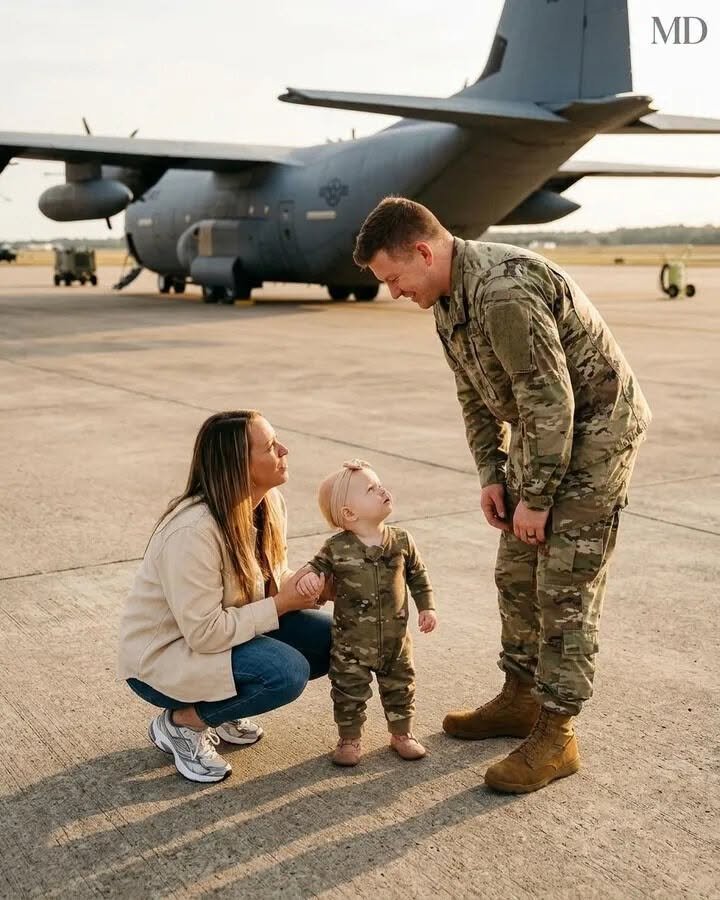
Two things to note plainly. First, the photo with this post shows a homecoming on an airfield, while the story itself describes a driveway arrival — the picture is the one sent with the link, not a photograph from the story. Second, the article gives no place, no dates and no way to check any of this independently, and the “never met” in the headline is the two sisters, who meet for the first time only at the end — so this is retold as the story is told, not as a verified event.