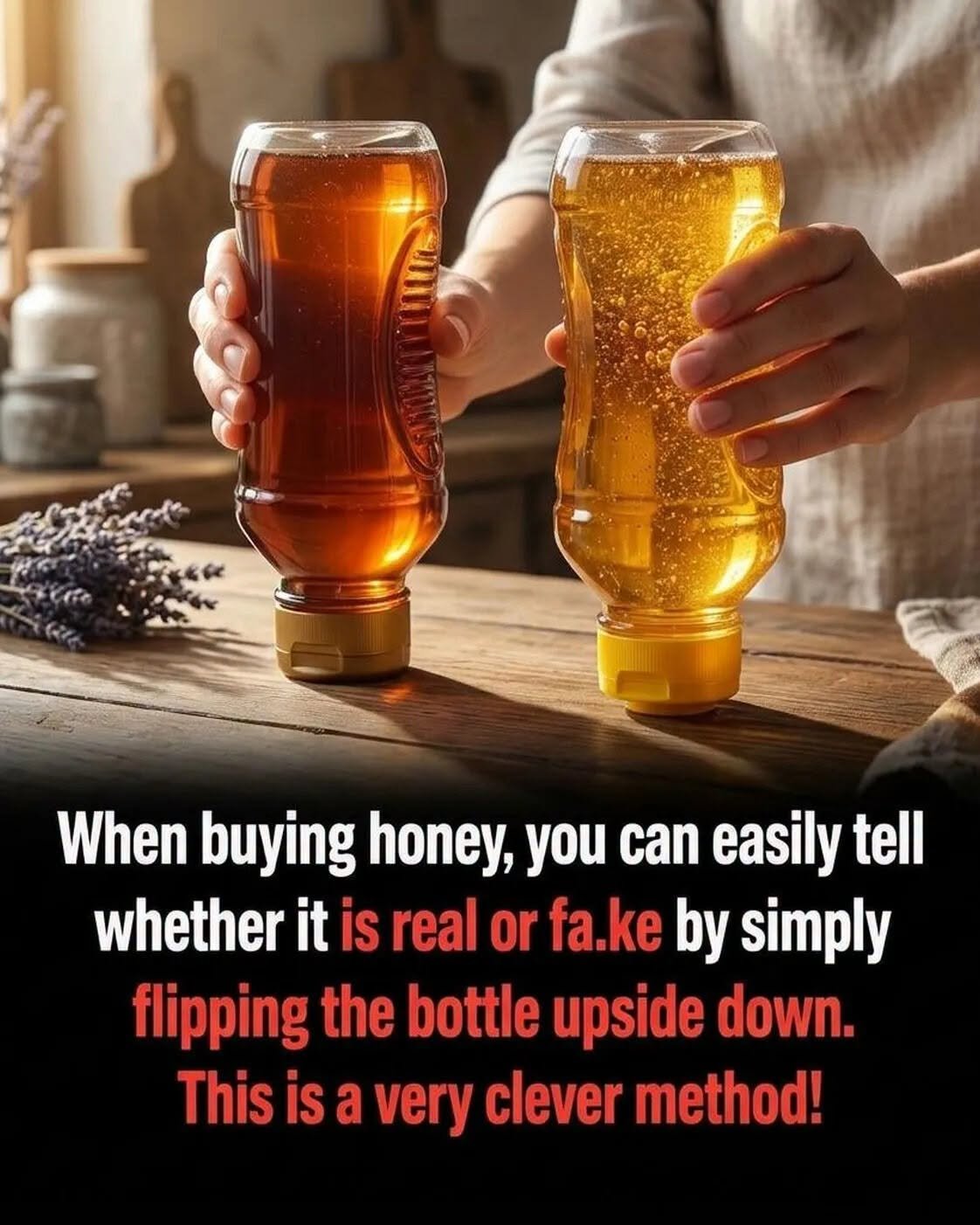
That golden jar of honey in your kitchen cabinet might be hiding an expensive secret. Across grocery stores, shoppers pay premium prices expecting pure, natural honey — yet a growing share of jars labelled 100% pure are cut with cheap sugar syrups, leaving buyers paying top prices for a diluted product.
The kitchen test going viral is simple: turn a sealed jar upside down and watch how the honey moves. Dense, pure honey generally shifts sluggishly, with a large, single air bubble rising slowly toward the top, while watery, syrup-heavy blends rush downward quickly and their bubbles zip upward or vanish almost immediately. A second check works the same way — drop a spoonful into a glass of cool water, and denser honey sinks to the bottom before gradually dissolving.
But the test is only a clue, not proof. Food scientists warn that no single household trick can guarantee purity on its own: authentic raw honey from certain blossoms can naturally flow thin, while heavily processed counterfeit syrups are often artificially thickened to mimic real nectar. To protect yourself, always inspect the ingredient label for single-ingredient purity, check the country of origin, and avoid suspiciously cheap bargain jars — buying directly from trusted local beekeepers or verified suppliers using laboratory testing remains the smartest way to be sure every drop is genuine.
Two things to note plainly. First, the article’s own page served two completely different wordings of its first page on different loads, so this post uses only the facts that stayed the same across every load. Second, the image’s headline says you can “easily tell” real from fake just by flipping the bottle — that is the image’s own wording, and the article itself says the opposite: no single test can guarantee purity, so the flip test is a helpful hint, not a verdict.