That December morning began like any other in my quiet Seattle apartment, with gray light and the soft hum of the heater. I made coffee and opened my laptop, expecting the usual chaotic flood of emails from my family’s Christmas planning thread. But there was nothing. No messages, no photos of the tree, no passive-aggressive notes about side dishes. When I tried to access our shared holiday folder, I was met with a stark “Access Denied” message. A cold dread settled in my chest. Then I saw the voicemail icon. My father’s voice, flat and final, informed me that for the sake of a “peaceful holiday,” I was not to come home for Christmas. The message offered no discussion, just a verdict. I stood frozen in my kitchen, the familiar ache of rejection rising in my throat.
For years, I had been the invisible support holding my family’s world together. I paid the mortgage, the utilities, the insurance on their house—the “boring administrative details,” as my dad called them. It was a silent tax I paid to belong. The memory of the previous Christmas flashed back: my father’s mocking comment when I arrived late from work, the family’s obligatory laughter, my silent humiliation. This voicemail wasn’t an oversight; it was an excision. As I processed this, a notification chimed from my bank: a reminder for the automatic mortgage payment on their house, due in 48 hours. The absurdity was breathtaking. I was banned from the home I was about to pay for.
A clarity, cold and sharp, cut through the hurt. I logged into my accounts and opened the spreadsheet where I’d meticulously tracked years of “family support.” The total was staggering—a fortune that could have been my own down payment. I found the loan documents. My name was listed as the co-borrower, necessary for the bank, but I held no ownership. I had been used as a financial tool. Then a text arrived from my father: a demand for a $7,000 catering deposit for the Christmas party I was now excluded from. It was an invoice, not an apology. Any remaining doubt vanished.
My mother arrived unannounced, a loaf of banana bread in hand, her universal peace offering. She pleaded for me to just pay the deposit, to keep the peace, to avoid my father’s temper. For the first time in my life, I looked at her and said no. I told her I would not pay—not for the catering, not for the mortgage, not for anything. After she left, I methodically cancelled every automatic payment linked to their home. The click of the mouse felt like the turn of a key, unlocking a cage I hadn’t fully seen I was in.
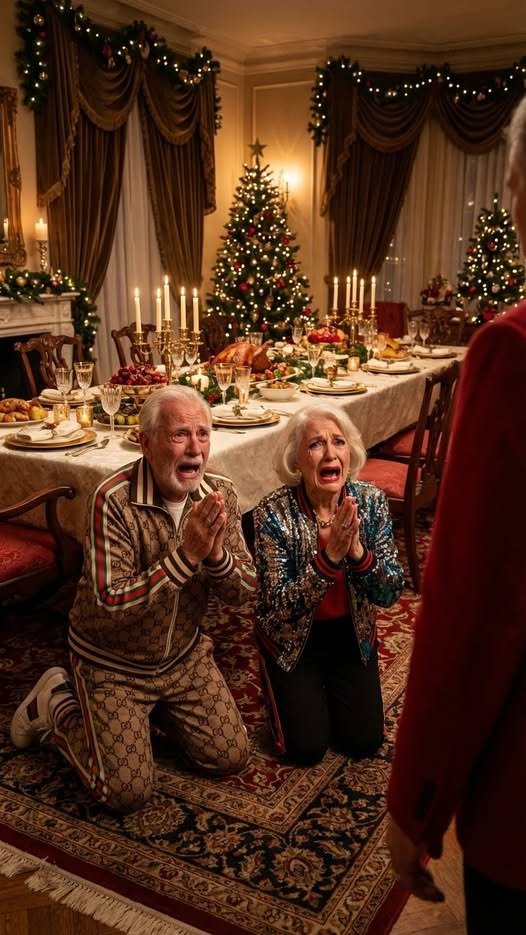
I drove to their house to deliver the news in person. The confrontation on the porch was brutal. My father blustered about being the head of the household; my sister smirked from the doorway. I told them the bank was closed. In the days that followed, I discovered my father was portraying himself as a community saint in the local paper, funding a grand neighborhood Christmas with his “life savings.” I emailed the editor with documentation, correcting the record. The fallout was swift and severe. The facade crumbled. On Christmas Day, I sat alone in my apartment, finally at peace. I had lost the family I thought I had, but in letting go of the burden of propping up their lies, I found something far more valuable: myself, and the quiet, beautiful freedom of no longer paying to be mistreated.