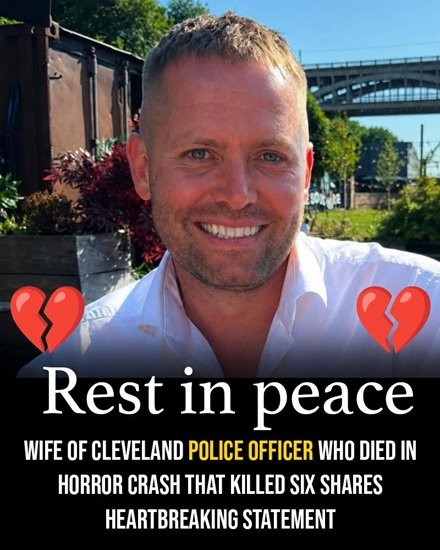
Cleveland Police officer Matthew Blades, 37, was among seven people who died in a devastating collision on the A66 in the early hours of August 22, 2026. Blades was travelling in a marked Cleveland Police vehicle with fellow officer Tom Clough, 38, when their vehicle was struck by a Volkswagen Passat travelling in the wrong direction. Police said the collision occurred at approximately 3:39 a.m. in the South Bank area. Both officers died at the scene, along with all five occupants of the Volkswagen.
The incident immediately led to investigations into the circumstances surrounding the crash and the events that had taken place beforehand. Authorities also urged the public to avoid speculation while investigators worked to establish exactly what happened. The five people travelling in the Volkswagen Passat were later formally identified by Cleveland Police. They were Cole Robert Worthy, 17; Theo Rae, 17; Makai Saddington, 18; Jakub Matusiak, 23; and Michael Robert Cahill, 23.
Cleveland Police said specialist family liaison officers were supporting the relatives of all those who died. The ages of those involved meant the collision took the lives of both experienced police officers and several very young people in a matter of seconds. Officials avoided drawing conclusions about individual responsibility while investigations remained active. The identities were released only after formal procedures and notification of the families had taken place.In the days after the crash, attention turned to the families left behind, particularly the wife and two young sons of PC Matthew Blades. His wife released a deeply personal statement through Cleveland Police describing the man her family had lost. She remembered him not primarily through his uniform, but as her husband, closest friend and a devoted father. She also described him as a beloved son, brother, son-in-law and uncle whose presence had been central to the people closest to him. Her statement made clear that the effects of the collision extended far beyond the immediate scene on the A66. For his family, the incident represented the sudden loss of a husband and father who had expected to return home after completing his shift.Blades’ wife said no words felt sufficient to honor him. She described him as someone who was patient, caring and deeply committed to his family, while also recognizing the importance he placed on his police work. Her tribute said he had been loved beyond words by relatives and friends and that his absence had created a space that could never truly be replaced. She also emphasized the role he played in the lives of their two young boys. The children, she said, would grow up knowing what kind of father he had been. Her words focused on preserving his memory for them as they become old enough to understand the scale of what happened.The tribute also addressed his work as a police officer. His wife said he died while carrying out a duty he believed in and while serving others with courage and dedication. At the same time, she made clear that his greatest legacy would remain the love he gave his family rather than the circumstances of his death. That distinction gave the statement an especially personal tone. A police uniform explained why Blades was on the road that morning, but it did not fully describe the person his wife and children knew at home. The family’s message therefore balanced respect for his profession with memories of the husband, father and relative they had lost.
His wife also thanked members of the emergency services and the wider police community for supporting the family. She said messages, visits and other gestures of kindness had meant an enormous amount during what she described as the most difficult period of their lives. Police officers and staff were themselves dealing with the loss of two colleagues while simultaneously assisting the bereaved families. Cleveland Police confirmed that specialist support was being made available for officers and staff affected by the incident. The force also deployed family liaison officers to relatives of those killed in the Volkswagen. The aftermath therefore involved both a criminal investigation and a large-scale effort to support multiple grieving families.
PC Tom Clough, 38, also died in the collision. Cleveland Police separately published a tribute from his family, who described him as someone with a strong sense of humor and a willingness to help others. His death meant the force lost two serving officers in the same incident. Chief Constable Victoria Fuller described the crash as an exceptionally sad moment for the force and those connected with it. She said both officers had been serving their communities when they were killed. The force subsequently put support in place for colleagues affected by their deaths.Investigators have provided a clearer account of the events leading up to the crash, although the independent investigation remains important to determining the full circumstances. According to the Independent Office for Police Conduct, Cleveland Police received intelligence about numerous incidents linked to a Volkswagen Passat. The vehicle, which contained five male occupants, was later located by officers. An armed response vehicle then began pursuing the Passat. The IOPC obtained in-car footage, incident logs and initial accounts from officers as part of its investigation. Those materials helped establish a preliminary timeline of the final minutes before the collision.
The pursuit lasted just under seven minutes, according to the IOPC’s review of police vehicle footage. During that pursuit, the Volkswagen entered the A66 at South Bank and began travelling against the normal flow of traffic. At that point, the officers involved in the pursuit abandoned the chase rather than following the vehicle in the wrong direction. Their armed response vehicle continued travelling on the correct side of the carriageway. This detail is important because the police vehicle that had been pursuing the Volkswagen was not the vehicle that was ultimately struck. The fatal collision involved another marked police vehicle operating in the same area.
Approximately 10 seconds after the pursuit was stopped, the Volkswagen collided with the police vehicle occupied by Blades and Clough. The two officers had not been participating directly in the pursuit at that moment. According to the IOPC, their vehicle was in the area assisting with efforts to locate the Volkswagen. Authorities believed the Passat was using cloned registration plates that had activated automatic number plate recognition technology. The Volkswagen was still travelling against the flow of traffic when it struck the police vehicle. All seven people in the two vehicles were pronounced dead at the scene.
Cleveland Police later provided additional information about the events that preceded the crash. The force said it had received several reports involving two vehicles being driven dangerously during the early hours of August 22. One of those vehicles was believed to be a Volvo XC60 that had reportedly been used to ram properties in the Middlesbrough area. The second vehicle was the Volkswagen Passat that later became involved in the fatal collision. Police said the two vehicles were believed to be associated with the same wider activity. Both were believed to have been operating with cloned registration plates in an attempt to avoid detection.
Automatic number plate recognition technology nevertheless detected the vehicles, according to Cleveland Police. The force later recovered the Volvo XC60 in Middlesbrough as part of its wider investigation. Police stressed that their investigation concerned the criminal activity that took place before the fatal collision as well as the circumstances of the crash itself. Officers from neighboring forces, including Durham, Northumbria and North Yorkshire Police, provided assistance. The investigation therefore extended beyond reconstructing the moment of impact. Detectives were also attempting to establish a complete timeline of events that had taken place earlier that morning.
By August 24, Cleveland Police said 12 arrests had been made as part of the wider investigation into activity connected with the incident. The announcement did not mean that the people arrested had been found guilty of any offense. Arrests allow police to investigate suspected involvement and gather evidence, while questions of criminal responsibility must be determined through the appropriate legal process. That distinction is particularly important in a case attracting intense public interest. Cleveland Police continued appealing for information while emphasizing that the inquiry remained active. The force’s statements focused on establishing facts rather than encouraging assumptions about people whose roles had not yet been legally determined.
The involvement of the Independent Office for Police Conduct was also a standard and necessary part of the aftermath. When someone dies following police contact, the matter must be referred to the IOPC in relevant circumstances so that the events can be independently examined. Cleveland Police made that mandatory referral after the crash. The IOPC declared an independent investigation at 6:03 a.m. on August 22 and sent investigators to begin reviewing evidence. Its purpose is to examine the conduct and circumstances surrounding the police involvement rather than assume wrongdoing before evidence has been analyzed. Cleveland Police said it was cooperating fully with that process.
IOPC investigators gathered several important forms of evidence soon after the collision. These included in-car footage from police vehicles, the incident log and initial accounts from officers who had been involved in the earlier pursuit. Investigators said they would continue obtaining and analyzing additional material. The early findings allowed the IOPC to confirm the approximate length of the pursuit and the point at which it had been abandoned. They also confirmed that the fatal police vehicle was separate from the armed response vehicle involved in the pursuit. The independent review remains significant because it can establish a clearer record of decisions taken in the minutes before the crash.
The tragedy occurred on the A66 in South Bank, an important road where a vehicle travelling against the normal traffic flow created an immediate danger. Cleveland Police confirmed from the beginning that the Volkswagen Passat had been moving in the wrong direction. The marked police vehicle carrying Blades and Clough was travelling correctly when the two vehicles collided. Because of the severity of the incident, the road remained closed while emergency services and investigators worked at the scene. Early police statements asked motorists to use alternative routes. Those practical disruptions, however, were secondary to the scale of the loss that investigators encountered.
The Chief Constable’s first detailed statement reflected the seriousness of losing two officers and five members of the public simultaneously. Victoria Fuller said the force’s thoughts were with all families affected. She and the Deputy Chief Constable visited the families of Blades and Clough after the officers had been formally identified. Specialist support was arranged for bereaved families and for members of Cleveland Police. Fuller also publicly asked people to avoid speculation while the investigation was ongoing. That request is particularly relevant when unconfirmed claims can spread quickly on social media after a major incident.
Accurate reporting of the collision requires separating facts established by investigators from allegations and commentary circulating online. Police have confirmed the identities and ages of all seven people who died. They have confirmed that the Volkswagen was travelling the wrong way on the A66 when it struck the marked police vehicle. The IOPC has confirmed that a pursuit occurred, lasted just under seven minutes and was abandoned before the collision. It has also confirmed that roughly 10 seconds separated the end of the pursuit from the impact. These are established details supported by official sources and do not require speculation about motives or actions that investigators have not yet formally determined.
This distinction is especially important when discussing the five young men who died in the Volkswagen. Their deaths are part of the same incident, but ongoing investigations mean not every question surrounding the events beforehand has been resolved publicly. Describing confirmed police reports about cloned plates or dangerous driving is different from assigning individual criminal responsibility to a particular deceased occupant without established evidence. The same principle applies to the people arrested after the crash. An arrest is not a conviction. A careful account should therefore describe what police and the IOPC have confirmed while avoiding conclusions that belong to investigators or courts.
For Matthew Blades’ family, however, those investigative questions exist alongside a much more immediate personal loss. His wife’s tribute makes clear that her attention is on the husband and father who will no longer return home. She described their two boys as children who will continue learning about their father through the memories shared with them. Her statement also said the love he gave his family would not disappear with his death. That message transformed the public identity of “PC Matthew Blades” into a more complete picture of a man whose life extended far beyond police work. It also underlined why official requests for privacy and restraint matter while families are grieving.
The phrase “line of duty” carries particular weight in the family’s statement. Blades was not killed while commuting home or during private travel. He was in a marked police vehicle performing his role when the collision occurred. His wife said he believed deeply in the duty he was carrying out. Cleveland Police likewise described both Blades and Clough as officers who were working to protect others when they died. These descriptions do not replace the need for investigation into the wider event, but they explain how their relatives and colleagues understand their final hours.
Tom Clough’s death created another family facing the same sudden transition from ordinary expectations to bereavement. His family thanked people for the condolences and support they received after the collision. Cleveland Police published their tribute separately, reflecting the force’s effort to allow each officer’s family to describe the person they knew. The two officers shared a profession and died in the same police vehicle, but each had relationships, memories and a life outside the incident. That personal dimension is easy to lose when reporting focuses entirely on the mechanics of the crash. It remains central to understanding why the event affected so many people.
The families of the five Volkswagen occupants are also being supported by specialist officers. Cleveland Police confirmed that family liaison officers continued working with them after formal identification. Two of those killed were 17 years old, one was 18 and two were 23. Regardless of the unresolved investigative questions surrounding the period before the collision, their relatives are also dealing with sudden deaths. Official statements have therefore repeatedly emphasized respect for all bereaved families rather than encouraging hostile public speculation.
The crash demonstrates why major incidents involving police contact are subject to several parallel processes. Cleveland Police has a criminal investigation concerning activity before the collision. The IOPC is independently examining the police pursuit and related decisions. Collision investigators must also reconstruct the physical circumstances of the impact. Meanwhile, family liaison officers and other support services are assisting relatives of the dead. These processes can take time because each depends on evidence rather than assumptions formed in the immediate aftermath.
Evidence such as vehicle footage can be particularly important in reconstructing events that unfolded within seconds. In this case, the IOPC used footage to establish that the pursuit was abandoned when the Passat travelled onto the wrong side of the A66. Investigators were also able to determine the approximate 10-second interval before the collision. Such details can clarify questions that eyewitness recollections alone may not resolve. Additional evidence may include communication records, automatic number plate recognition data, vehicle examination and other material gathered during the investigation. The IOPC has said its work to obtain and analyze evidence is continuing.
The official timeline also corrects an easy misunderstanding about the collision. Blades and Clough were not inside the armed response vehicle that had conducted the pursuit. Their marked police vehicle was elsewhere in the area assisting with the search. The pursuit had already ended before their vehicle was struck. The Passat was travelling against traffic while Blades and Clough were travelling correctly. This distinction is essential for any accurate account of their deaths.
Cleveland Police’s wider investigation remained active in the days after the incident. By August 24, the force had reported 12 arrests connected with the alleged criminality preceding the crash and had recovered the Volvo believed to have been connected with earlier incidents. Other police forces provided additional officers and resources. These developments show that investigators were examining a sequence of events rather than treating the collision as an isolated traffic accident. At the same time, authorities continued avoiding detailed conclusions while evidence was still being collected.
For readers following the case, that means later official findings may provide additional context. The facts confirmed during the first days after a major investigation are not always the final account. New video, witness information or forensic evidence can clarify timelines and responsibilities. Until investigators release those findings, repeating rumors as established facts can misrepresent both the dead and the officers involved. Cleveland Police explicitly urged people to avoid that kind of speculation almost immediately after the collision.
The strongest confirmed human story at this stage comes from the families themselves. Matthew Blades’ wife described a man whose children knew him as a loving father rather than simply an officer. She spoke about the enormous void created by his death and the memories she intends to preserve. She also thanked those who stood beside the family after the crash. Her message ended by emphasizing how deeply he would continue to be loved and missed. The tribute offers a perspective that no collision report or investigative timeline can provide.
The same is true of the wider policing community. Losing two serving officers in one collision has an impact on colleagues who worked with them and expected to see them return after the shift. Cleveland Police acknowledged that staff members would require support and described the incident as affecting the force deeply. Emergency personnel attending the scene were also confronted with seven deaths simultaneously. The force’s public response therefore involved both operational investigation and internal support for people exposed to the tragedy.
Nothing in the confirmed facts requires sensational language to communicate the seriousness of what happened. Seven people died. Two were serving police officers. Five were young occupants of another vehicle. A police pursuit had ended seconds earlier. A car travelled against traffic on the A66 and collided with a marked police vehicle. Those facts alone explain the scale of the tragedy.
The ongoing investigations will eventually provide a fuller picture of the events before 3:39 a.m. on August 22. Until then, the IOPC’s independently verified timeline remains one of the most reliable accounts available. It establishes the pursuit, its duration, the decision to stop it and the short interval before the fatal impact. Cleveland Police’s investigation provides additional information about reports of dangerous driving, cloned number plates and a second vehicle connected with the earlier activity. Together, these official sources allow the incident to be described accurately without relying on unverified social-media claims.
For Matthew Blades’ wife and children, however, no investigative report will change the most basic reality. A husband and father left for work and did not return. Her tribute says their sons will grow up hearing about the father who loved them and about the life he shared with their family. She intends to carry those memories forward even as the investigation continues. That private responsibility now exists alongside the public attention surrounding his death.
Blades’ family has also made clear that gratitude remains part of their response despite their grief. Emergency workers, police colleagues, relatives and others have provided support since the collision. His wife said those gestures would not be forgotten. That statement recognizes the people who appeared after a tragedy they could not undo but could help the family endure. Support cannot replace the person who died, but it can reduce the isolation that often accompanies sudden bereavement.
The deaths of Matthew Blades and Tom Clough will remain connected with the A66 collision, but their families’ tributes ensure that the incident does not become the only thing publicly remembered about them. Both men had lives and relationships that existed before August 22. Blades was a husband and father of two young boys. Clough’s family remembered his humor and his willingness to help others. Those descriptions provide a human record alongside the official investigation.
As Cleveland Police and the IOPC continue their work, the responsible approach is to follow confirmed updates and distinguish evidence from allegation. The official account currently shows that the Passat was pursued, the pursuit ended when it entered the A66 against traffic, and the fatal collision occurred about 10 seconds later with another marked police vehicle. It also confirms that all seven occupants of the two vehicles died at the scene. Questions beyond those established facts remain matters for ongoing investigation.
For Blades’ family, the final word is less about the investigation than about the person they lost. His wife described him as someone whose love for his family would remain even though his life had ended unexpectedly. She wants their children to understand the kind of father he was and the place he will continue to hold in their family’s story. That remembrance is likely to last much longer than the immediate headlines surrounding the collision.
The tragedy of August 22 left seven families facing sudden loss and an entire police force mourning two colleagues. It also initiated complex investigations into a sequence of events that unfolded over only a few minutes and ended in seconds. Those investigations will determine the fullest factual account possible. Until then, the confirmed information from Cleveland Police and the IOPC provides a clear foundation without the need for speculation. And at the center of that account are seven people who did not return home, including Matthew Blades, whose family remembers him above all as a devoted husband and father.