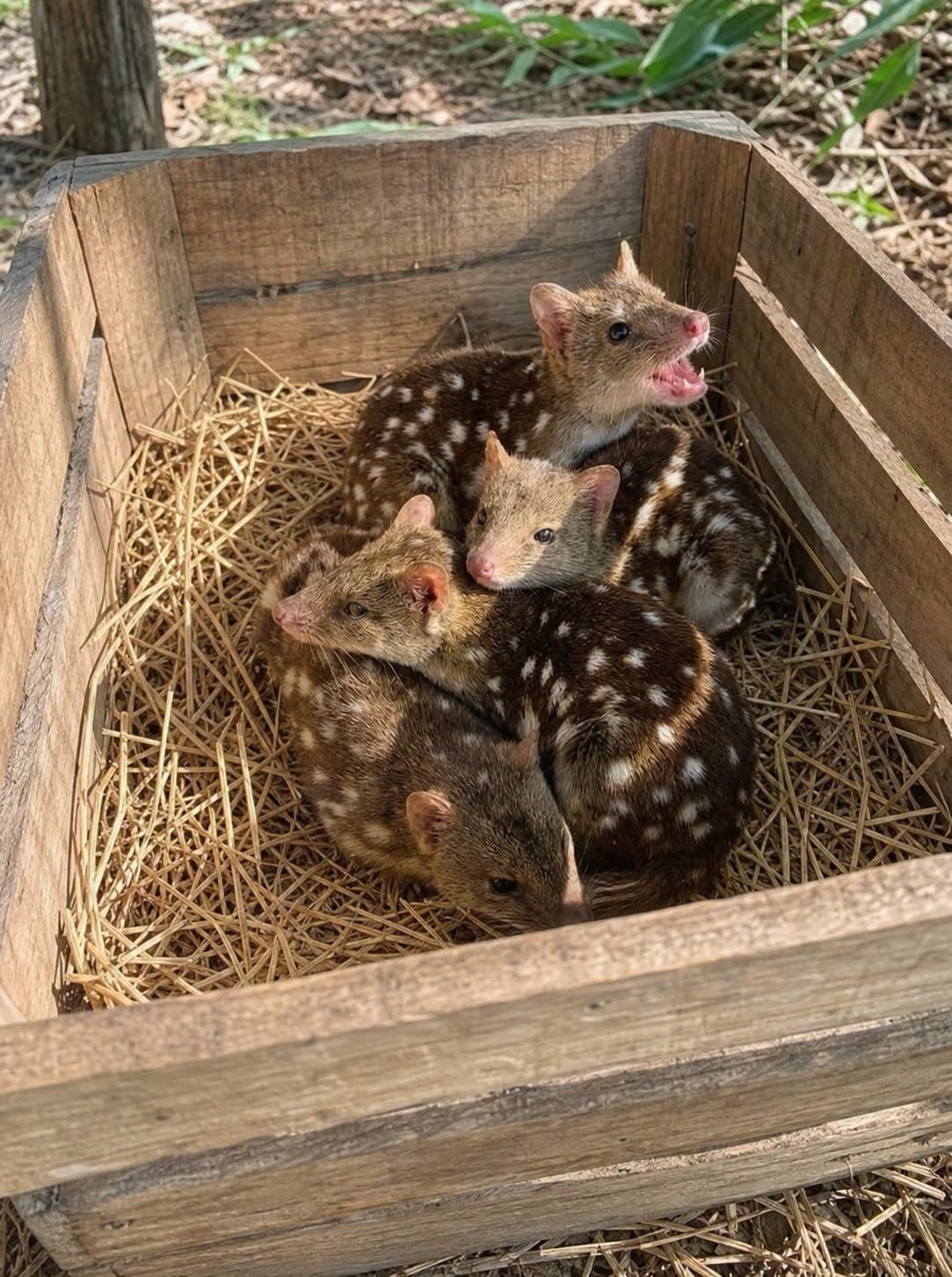
Hope roared back into the outback.
For years, the western quoll was a whisper, a memory, a set of fading tracks in red dust. Now, inside a remote sanctuary, researchers have opened a pouch and seen something no one dared promise: tiny, living proof that extinction can be reversed. Cameras flash, hearts race, and in the darkness, a spiky miracle cli… Continues…
The newborn western quolls at Mt Gibson Wildlife Sanctuary are more than a conservation milestone; they are a living rebuttal to the idea that once a species declines, it is already lost. After decades of habitat destruction, invasive predators, and shrinking ranges, the discovery of pouch young shows that careful planning, predator control, and habitat restoration can rebuild a future from almost nothing.
At Mt Gibson, ecologists didn’t just open the gates and hope. They redesigned a landscape: securing safe den sites, restoring vegetation, and monitoring every movement with motion-activated cameras. Through those lenses, animals like the now-famous Aang revealed how quickly quolls could adapt when given a genuine chance. Each grainy night-time image, each healthy mother, each new joey is a quiet revolution—proof that with patience and science, Australia’s lost hunters can once again shape their own wild country.