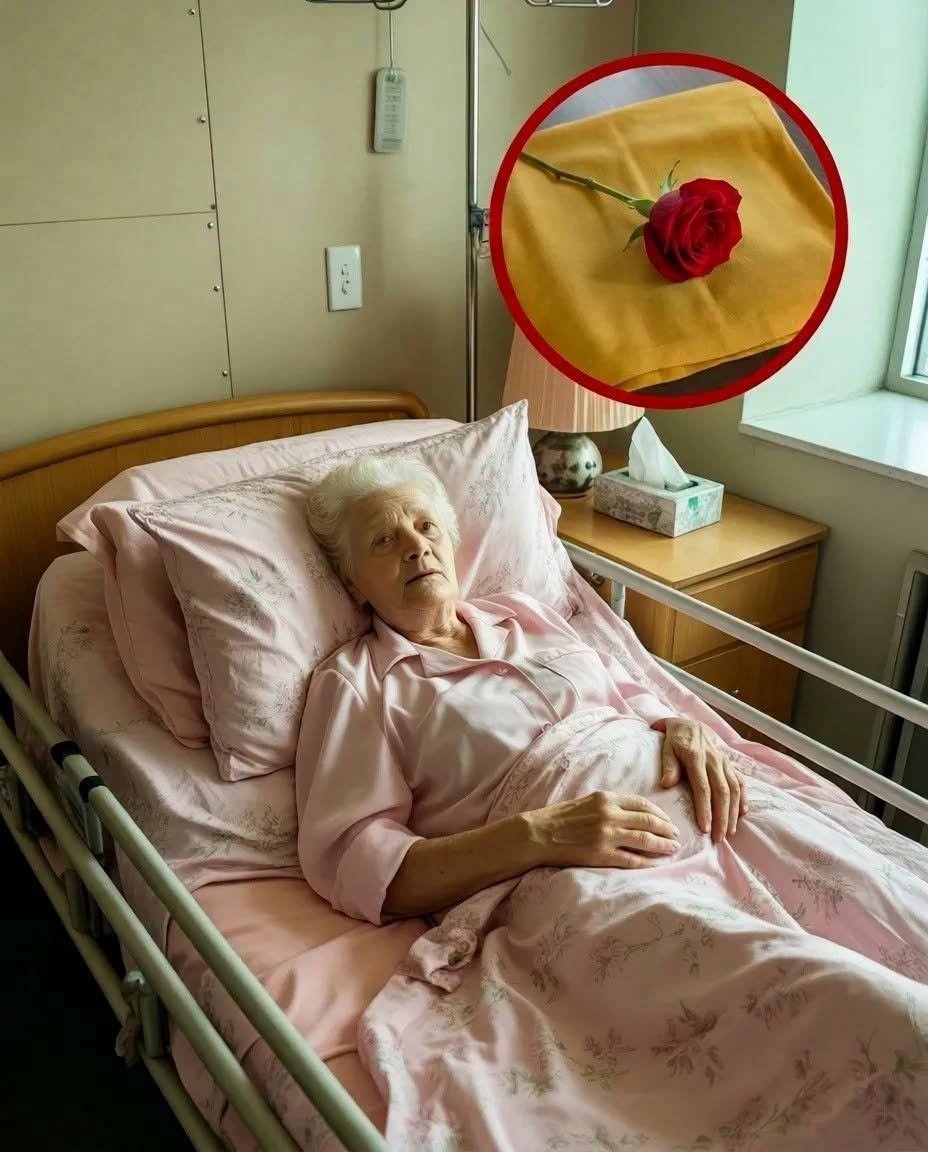
I was working brutal hours and draining myself to help the woman who raised me stay in assisted living. She had always been there for me, so I never questioned what it was costing me. Then I showed up early one afternoon and overheard something that made me realize I had no idea what was really going on.
I’m 40, and the woman I call Mom is not my biological mother.
My real mother died when I was eight.
Then my dad married Linda.
She never tried to take over. She never asked me to call her Mom, never competed with the memories I had of my real mother, and never made me feel like loving her meant betraying the woman I had lost.
She simply showed up.
She packed my lunches, sat beside me when I cried, attended every school event she could, and learned how to braid my hair by watching old videos because she didn’t want me to feel different from the other girls.
When I was seventeen and my first serious relationship ended, Linda sat on the edge of my bed for nearly two hours while I cried.
When I graduated from college, she was the loudest person in the audience.
When I got my first real job, she framed my offer letter and hung it in the hallway.
And when I got married, she held my hands before I walked down the aisle and whispered, “Your mother would be so proud of you.”
She never tried to replace my mother.
Somehow, she became one.
So when Linda began struggling to live independently in her late sixties, I didn’t hesitate to help.
At first, it was little things. Grocery shopping, prescription pickups, doctor appointments, and fixing whatever had stopped working in her apartment.
Then she fell in her bathroom.
She wasn’t seriously injured, but the incident frightened both of us. Her doctor recommended assisted living, where she could receive help with daily activities and have someone nearby if another emergency occurred.
The facility was clean, comfortable, and staffed by people who seemed genuinely caring.
It was also incredibly expensive.
Linda’s savings covered some of the cost, but not enough to make it sustainable. I began covering the difference, telling myself it was temporary.
A few hundred dollars became a thousand.
Then more.
I picked up extra shifts, accepted weekend work, and stopped taking vacations. I delayed replacing my aging car and put off repairs around my own home. There were months when I barely had enough left after paying the facility’s bill to cover my own expenses.
Whenever someone suggested I was doing too much, I gave the same answer.
“She raised me. What else am I supposed to do?”
Linda had never asked me to sacrifice my life for her. In fact, she often told me I needed to slow down.
But I could see the fear in her eyes whenever the monthly bill arrived, and I couldn’t bear the thought of her being forced to leave the place where she finally felt safe.
So I kept paying.
For almost two years, my life became a cycle of work, bills, exhaustion, and short visits with Linda.
I told myself that love sometimes required difficult choices.
I never imagined that the hardest part of the story was something I hadn’t even discovered yet.
One Tuesday afternoon, a meeting at work was canceled unexpectedly. I decided to visit Linda earlier than usual, hoping to spend a little extra time with her before heading home.
I picked up her favorite lemon cookies and drove to the facility.
As I approached her room, I heard voices coming from inside.
One belonged to Linda.
The other belonged to a woman I didn’t recognize.
I was about to knock when I heard the stranger say something that stopped me cold.
“Linda, you can’t keep letting her pay for everything. She’s working herself into the ground, and you know it.”
I froze outside the door.
Linda answered quietly.
“I know.”
“Then tell her the truth. She deserves to know what you’ve been doing.”
There was a long silence.
Then Linda said something that made my fingers tighten around the paper bag of cookies.
“I’m afraid she’ll never forgive me.”
I felt my stomach drop.
What truth?
What had Linda done?
I wanted to knock, walk inside, and demand an explanation. Instead, I remained where I was, barely breathing.
The stranger spoke again.
“She thinks you’re struggling financially. She thinks her money is the only thing keeping you here.”
Linda’s voice trembled.
“Because that’s what I’ve allowed her to believe.”
I couldn’t take it anymore.
I pushed the door open.
Both women turned toward me.
Linda’s face went completely pale.
The stranger stood up immediately, looking as though she’d been caught somewhere she shouldn’t be.
“How long have you been standing there?” Linda asked.
“Long enough,” I replied.
My voice sounded strangely calm, considering the storm building inside me.
I looked at the unfamiliar woman.
“Who are you?”
“My name is Patricia,” she said. “I’m Linda’s financial adviser. I’ve known her for years.”
I turned back to Linda.
“Why would she say I’m paying for everything? What am I supposed to forgive you for?”
Linda looked down at her hands.
For a moment, she seemed much smaller than the woman who had raised me. Her shoulders sagged, and she rubbed her thumb against the edge of her blanket.
Then she took a shaky breath.
“Sit down, sweetheart.”
I didn’t want to sit.
I wanted an answer.
But I sat anyway.
Linda asked Patricia to give us a few minutes. The woman hesitated, glanced at Linda, and then quietly left the room.
When the door closed, Linda reached for my hand.
I pulled mine away.
“Please don’t,” I said. “I’ve spent two years working myself sick because I thought you needed me. I’ve turned down opportunities, emptied my savings, and put my own life on hold. If there’s something I don’t know, I need you to tell me now.”
Tears filled her eyes.
“I know what you’ve sacrificed.”
“Then tell me the truth.”
Linda stared at me for several seconds before speaking.
“The money from my retirement account never disappeared. And I haven’t been using all of my savings to pay for this place.”
I blinked.
“What?”
She swallowed hard.
“I sold my house before I moved here. I also had investments and a life insurance policy from your father. I’ve been receiving retirement income every month.”
I stared at her, trying to understand.
“Then why have I been paying the difference?”
“Because I told you I couldn’t afford it.”
The room seemed to tilt.
“You said your savings were almost gone.”
“They were getting lower,” she admitted. “But I had more money available than I told you.”
I stood up.
“How much more?”
Linda began to cry.
“I have enough to cover my care for years. Possibly longer, depending on what happens.”
I couldn’t speak.
For two years, I’d been working extra shifts and sacrificing my own security because I believed there was no other option.
Now I was being told that the situation was not what I thought it was.
“Why?” I finally asked. “Why would you let me do that?”
Linda covered her face.
“Because I was afraid.”
“Afraid of what?”
“Of becoming a burden. Of losing control over my own life. And of watching you spend everything you had on me.”
I shook my head.
“That doesn’t make sense. If you had the money, you could have told me.”
“I should have.”
She wiped her cheeks.
“When your father died, he left me financially secure. I was careful with the money because I wanted to make sure I would never have to depend on anyone. But when I fell and the doctors recommended assisted living, I became terrified. I thought I would lose my independence, my privacy, and eventually my place in your life.”
I frowned.
“What does that have to do with my money?”
Linda looked directly at me.
“Every time you paid a bill, you told me I was your mother. You told me you were happy to help. And I believed you meant it. But I also knew you were giving up things for me, and I didn’t know how to tell you to stop without making you feel that I didn’t appreciate you.”
“So you just kept accepting it?”
“I convinced myself that you would stop if it became too much. I thought you would tell me when you couldn’t do it anymore.”
A bitter laugh escaped me.
“I thought you would tell me when you didn’t need it anymore.”
Neither of us spoke.
Then Linda reached beneath her bedside table and pulled out a thick envelope.
“I’ve been trying to find the courage to give you this.”
Inside were bank statements, investment records, and documents showing the money she had kept aside. The numbers made my head spin.
There was enough to cover the shortfall I had been paying, with money left over.
But the papers weren’t the only thing in the envelope.
There was also a handwritten letter.
I recognized Linda’s handwriting immediately.
She had written it several months earlier.
My darling girl,
I have spent so much of my life trying to make sure you never felt that losing your mother meant losing the person who would care for you. Somewhere along the way, I became so afraid of needing help that I forgot how to accept love honestly.
You have never owed me anything for raising you. Not your money, not your time, and not your future.
If you are reading this, I hope I have finally found the courage to tell you that.
I stopped reading.
My eyes burned.
Linda had never been a perfect mother. Neither had I been a perfect daughter. But she had been there for every important moment of my life, and I had believed that caring for her meant taking on every burden myself.
Now I understood that we had both been making decisions out of fear.
She feared becoming a burden.
I feared failing the woman who had given me a second childhood.
And neither of us had been honest enough to see what our silence was costing us.
I sat beside her and cried.
Not because the money had been wasted, although I was angry about that too. Not because I suddenly loved her less.
I cried because I was exhausted, because I felt betrayed, and because I wished we had talked about all of this before it reached the point where I could barely recognize my own life.
After a while, Linda whispered, “Can you forgive me?”
I looked at the woman who had taught me to tie my shoes, held me through nightmares, and stood beside me when I became a mother myself.
“I don’t know how to forgive you today,” I said honestly. “But I don’t want to lose you over this. We have to stop hiding things from each other.”
She nodded through her tears.
“Yes. We do.”
That afternoon, Patricia returned to help us review Linda’s finances and discuss the best way to handle future expenses. We agreed that Linda would pay for her own care from her available resources, while I would stop making automatic payments until we had reviewed every bill together.
For the first time in two years, I allowed myself to imagine a life in which I could help Linda without destroying my own financial stability.
I went home that evening and slept for nearly ten hours.
Over the following weeks, I began making changes. I reduced my extra shifts, restarted my savings plan, and finally scheduled repairs I had postponed for years. Linda and I began talking more openly about money, health, and what we both wanted the next chapter of our lives to look like.
Our relationship wasn’t instantly repaired.
There were difficult conversations. There were moments when my anger returned, and moments when Linda struggled with the guilt of what she had allowed to happen.
But we kept talking.
And slowly, trust began to return.
A month later, I visited her with another box of lemon cookies. We sat by the window, watching the afternoon sunlight fall across the garden.
Linda took my hand.
“I hope you know that I never needed you to prove you loved me,” she said.
I squeezed her fingers.
“I know that now.”
Then I smiled sadly.
“But I wish you’d trusted me enough to tell me the truth.”
She nodded.
“I wish that too.”
As I drove home that day, I thought about how often we confuse love with sacrifice. How easily we convince ourselves that being a good daughter, son, parent, or partner means carrying every burden without complaint.
But love should not require one person to suffer in silence while the other remains in the dark.
Sometimes helping someone means paying a bill or showing up when they need you.
Sometimes it means setting boundaries.
And sometimes, the most loving thing two people can do is sit down, tell each other the truth, and admit that fear has been making their decisions for far too long.
Linda raised me without ever demanding that I repay her.
I had spent two years trying to repay her anyway.
Now I understand that I never owed her my exhaustion.
I owed her honesty, just as she owed me the same.
And perhaps the most important lesson we learned was this:
The people who love us shouldn’t have to choose between protecting us from worry and trusting us with the truth. Real love makes room for both kindness and honesty.